Genuine well being for ourselves and the planet

Though I am “pumping iron” these days as part of a local bone builders class, and exercise is hugely important for happiness, today I’m using that term metaphorically.  The focus of this blog is actually internal, on our innate and unique character strengths.   Since it’s summer, let’s start outside, in the blueberry patch.
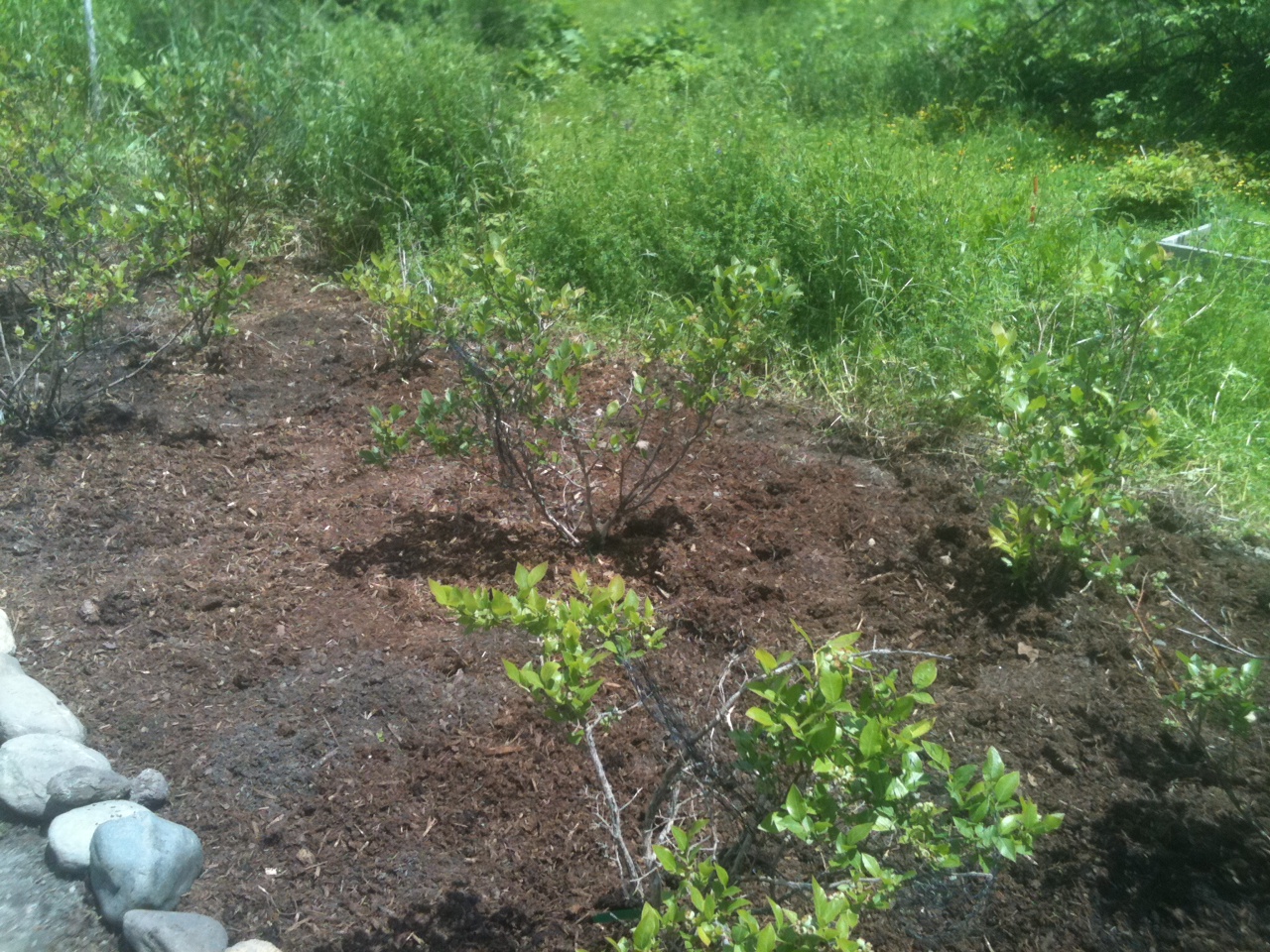
Finally!  I have weeded and mulched all 17 blueberry plants!

Finally! I have weeded and mulched all 17 blueberry plants!

Blueberries and happiness: For two and a half years, six bags of unopened pine mulch lay undisturbed along the border of my small blueberry patch.  Last summer, my daughter and her newborn with uncooperative sleep habits moved in with us, so I think I have a good excuse for never finding the time to weed and mulch the blueberries.  As for summer 2011 … hmmm, I can’t quite remember what got in my way.  Finally, after seeing the bags of mulch in the Google satellite image of my house (ummm, that’s embarrassing!),  I was determined to get it done this summer.   By mid-June, I had finally weeded and mulched the entire patch.  No more accusing mulch bags spoiling my backyard view.

Now you may think that a job with such limited parameters that still took me more than two years to finish does not play to my strengths.  Perhaps, but I’m still a lot better at digging in the dirt and strewing mulch than I am at storing the harvested berries.  With no knowledge of how to make jams and preserves, I’ve just popped them in the freezer.

Then, while weeding, I had an “aha blueberry moment”.  My daughter LOVES to cook and she LOVES to research, so I made a deal with her — I’ll pick the blueberries and supply jars if she’ll figure out how to make jams and then proceed to do so.  She happily said, sure!  Happily because, in part, she’ll be working from her strengths (much more so than me!).

Strengths as a path to happiness: When I went to my very first seminar on positive psychology in 2010 (probably even before I bought all that mulch), I gained an intellectual understanding that pinpointing what our strengths are, and using those strengths, can lead to greater personal joy.  But it took me a long time to really “get it.”

Some keys to happier living make instant sense to me — like gratitude, forgiveness, kindness, savoring.  Those make my heart sing. Other strategies take more time to internalize.  With strengths, sometimes I’d get hints at how they work —  like the time a teacher told me that she and her colleagues were unhappy because they had to spend too much time doing paperwork rather than, duh, teaching — but I had to experience it in my own life before gaining a genuine understanding.  This experience, which transformed a grumpy me into a happy me, happened last winter.  Let’s go back inside.

The painting episode: I came to a Small Group Ministry meeting at the Montpelier Unitarian Church because I hoped discussing spiritual beliefs in an intimate setting would feed my soul.  When I got there, I wished I had read the fine print.   Already in low spirits (it was January and grey and I was sick with a cold that took about two months to conquer),  I was quite disgruntled to learn that our group was expected to perform a service project.
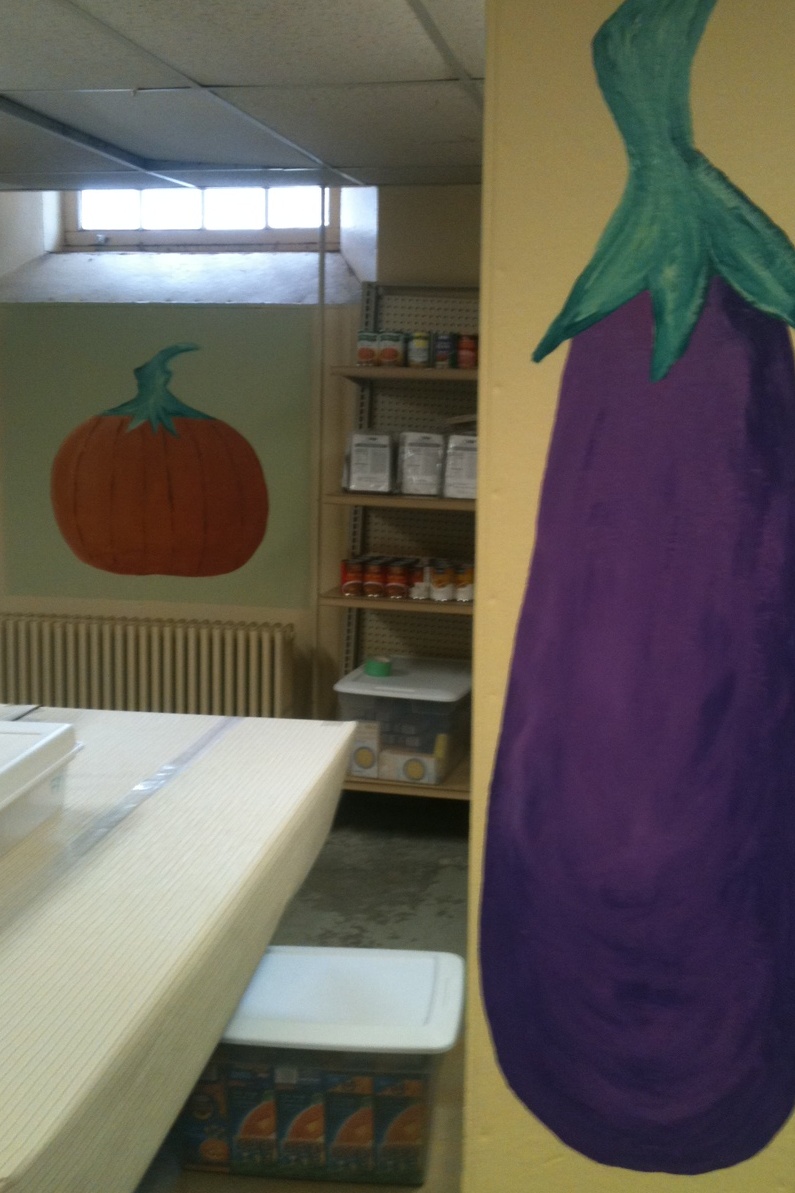
Two of the paintings our church group created at the local food shelf.

Two of the paintings our church group created at the local food shelf.

“Service project!?!?”  I thought.  “I didn’t sign up for any service project!”  Between helping care for my live-in baby granddaughter and planning a free-to-the-public happiness weekend, I felt like my whole life was a service project already.  I was displeased, and, this being a setting where we encouraged to share our genuine feelings, I said as much.

However, at our second meeting, when the subject of our service project arose, one group member suggested we paint the walls of the local food shelf, to make it more inviting for their customers.  And here’s where it all shifted.  I said, “A few years ago, I led a group of fifth and sixth graders painting a fruit and vegetable mural for their school cafeteria.  Maybe we could do something like that?”

Much to my surprise and pleasure, the group readily agreed.  Because painting is definitely a strength of mine, suddenly, this project became joyful.   I was also grateful, because the whole group enthusiastically worked from my strength.  I got to draw each fruit or veggie, then instruct the other group members on how to apply the base paints.  Several of us did the shading that is so vital in making paintings come to life.  In the end, we left behind paintings of a pumpkin, eggplant, cherries, grapes, a carrot, peas, and tomatoes.  Other than the grapes (my fault entirely), I think we did a pretty good job.

(BTW, this was anonymous — a random act of kindness.  Only the director of the food shelf knows who we are, so please don’t spill the beans.)

So I was happy, and glad my fellow group members pulled me out of my funk and taught me a valuable lesson.  Since then, I see the strengths issue frequently.  For example two weeks ago, I heard a brilliant — and very Vermont — radio commentary by Helen Labun Jordan on using her strengths to contribute to the vitality of her community — in this case, baking pies for the Adamant Black Fly Festival.  Very funny!  (P.S., she won!)

What about you?   Working from our strengths is a happiness strategy Martin Seligman tested and proved with his graduate students at the University of Pennsylvania.   Seligman, who is a towering, momentous figure in the positive psychology world, does a great job explaining the strengths strategy in part of this video.  He and his colleagues have also given all of us all a great gift: a free VIA Survey of Character Strengths, which takes about 20 minutes to complete.  I was a little surprised at my results (I expected creativity to show up higher on the list), and maybe you will be too.

In any case, the next time you find yourself feeling grumpy — and we all know there will be a next time — maybe knowing your strengths will help you find your way back to happiness a little faster.   Maybe even with pie, or blueberry jam!
This Memorial Day weekend it was snowing at my home in Vermont, but now that the sun is out — and we’re supposed to get 80-degree temperatures in a few more days — perhaps we can relax and believe that summer is finally here.  For many of us, in addition to pulling endless weeds, summer means vacation!  Will those vacations make us happy?

According to research, yes.  A February 2010  New York Times article  reported on findings from the Netherlands that vacations do in fact make us happier, if nothing goes wrong, like an illness or a fight with your spouse.  The Dutch researchers found that the biggest happiness hit comes from anticipation.  We can also savor the joy of vacations in the present moment.  Not only that — Sonja Lyubomirsky notes in The How of Happiness that we can savor these experiences in retrospect, especially with the aid of photographs.

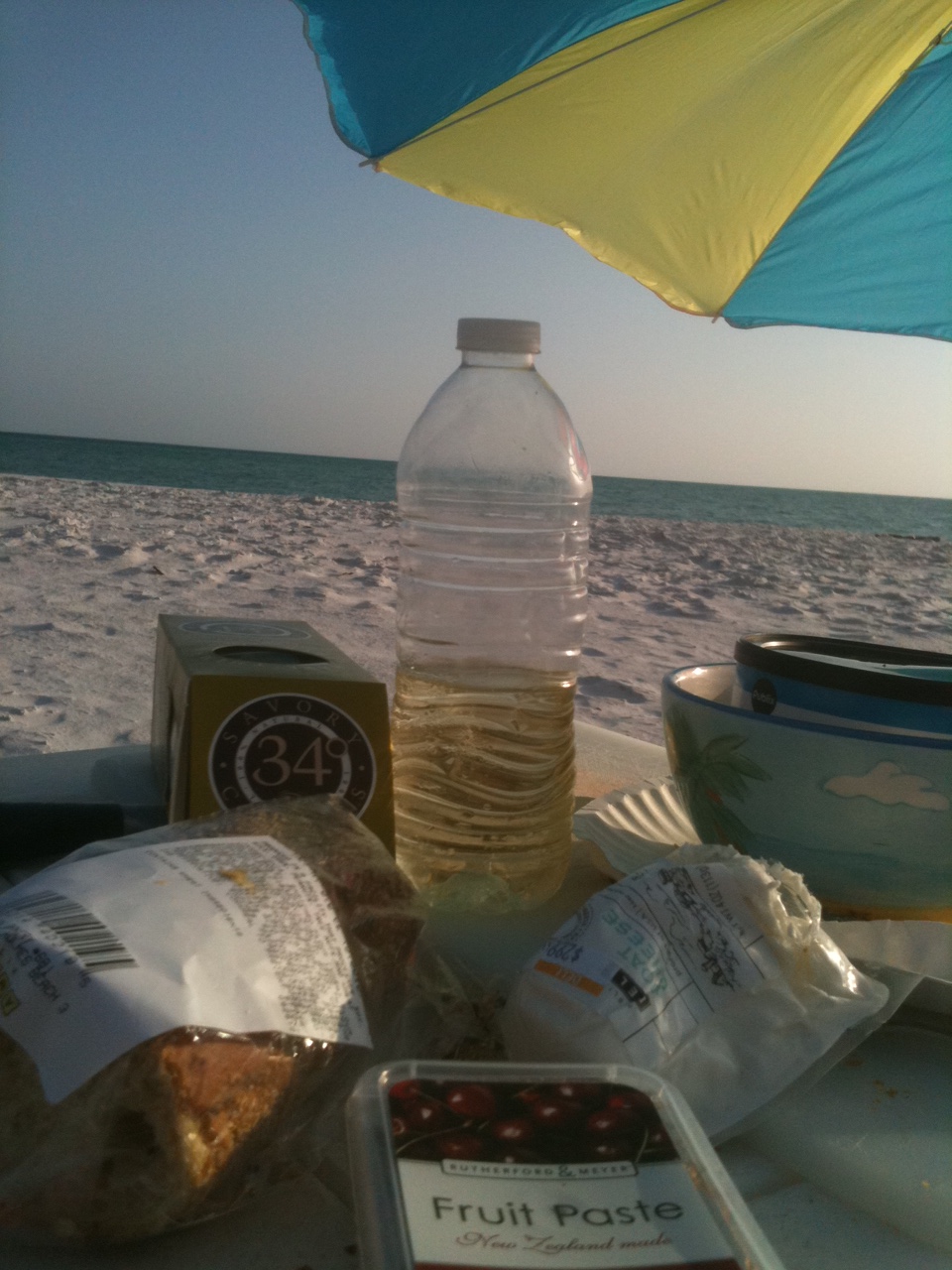
A very happy evening with a simple but savory meal on the beach.

A very happy evening with a simple but savory meal on the beach.

Okay, that’s the research, that’s the theory.  But how does it work in “real” life?  This has been on my mind because a month ago, when I was returning from a blissful week long stay at the beach, I was not happy.  Rather, I was close to tears — and a little bit angry, too.

The anger — or maybe it was resentment — was toward those (temporarily?) fortunate souls who were just arriving on the island and toward those with the financial resources to afford second homes and lots of time in this heavenly spot.  I felt like living proof that our country’s extreme income inequality breeds unhappiness.

I also felt spoiled, petty, and not very highly evolved for even thinking in these terms.  First of all, the trip was an amazing Christmas present to me from my very loving husband, and throughout the week, I was filled with gratitude for him.  But the desire to stay longer overwhelmed me with sadness.  Ah, desire — the cause of so much suffering!

Further, I know that comparing ourselves with others is insidious and a sure fire recipe for unhappiness.  Yet there I was, comparing away, and finding myself very much wanting … Never mind that I was still in a warm, sunny, carefree place while most of my friends were stuck in climates where winter just wouldn’t let up.  Or, the much broader comparison with all the pockets of desperate unhappiness in the world.  I was looking at those with more money and more time than me, and that comparison was anything but cheer inducing.

I’m pleased to report, I’ve got my happiness equilibrium back and can look at photos and videos of the trip and feel joy.  I still long to return, but that longing functions more as an inspiration for me to take the steps I need to take to make that happen.  It’s now a goal, and goals can increase our happiness.  Can increase our happiness, or not — depending on the goal!

A month out from my sad state of desire and social comparison, I’ve landed on three thoughts: first, happiness is a process; second, the ground rules can seem murky sometimes; and third, never underestimate the value of a mindfulness practice.

A Lifelong Process: In my happiness workshops, I like to quote writer Margaret Lee Runbeck, who said, “Happiness is not a state to arrive at, but a manner of traveling.”  I also like to compare cultivating one’s own happiness with maintaining flexibility through a regular yoga practice.  It’s not something we can do once or twice and declare victory.  We have to stick with it to maintain our happiness muscle tone.

So maybe my vacation deprivation was a little teeny tiny example of income inequality — and maybe, much more so, I was a loud example of the need to maintain one’s happiness practices.  After all, I read about this field all the time, and I try to heed the wisdom of the great science of happiness thinkers.  Throughout the week, I consciously savored the experience, expressed gratitude, exercised, and even went to yoga class twice.

It wasn’t enough to carry me through the departure.  Guess I’ve still got work — a lot of work!! — to do on my happiness journey.

The murkiness of happiness practices: Driving home, I mulled over the complexity of happiness strategies.  For example, savoring.  Really, it was a sweet, sweet week — perfect weather, and we saw many wild animals in their own habitat (including a snake that liked our patio, and two manatees in a nearby canal) — with much to savor.  But, did that make it harder to let go?

Then there’s social comparison — obviously, a source of distress for me.   Yet, comparison with others can serve as a spur, providing us with the role models we need to follow.  For example, there was a lot of time for people watching on the beach, and I saw many fit bodies of all ages — an inspiration to me to be more physically active and stay as healthy as I can for as long as I can.  Envy may be destructive, but looking at a woman older than me in great shape, and thinking, “Wow, good for her!  Maybe I can do better, too!” seems very positive and an excellent motivation for long-term happiness.

Mindfulness: I’m beginning to think all roads lead to mindfulness.  It seems like any happiness question or strategy you examine includes a crucial element of awareness.  In this case, thankfully, I was aware and self-reflective.  While I felt bad for myself, I knew that was a) petty and b) temporary.

Mindfulness helps us make better choices.  I say that I now have a goal of getting back to this gorgeous island, but at what cost?  Do I focus on making money for a vacation rather than follow my true calling?  Do I choose a tropical vacation trip over a visit with my granddaughter?  Meditating helps me find the answers to these and an infinite number of other questions, big and small.

I also know that so much unhappiness can come from wanting.  Wanting, wanting, wanting.  And yes, that wanting can sometimes serve us, but more frequently it leads to unnecessary suffering.  A meditation practice is so crucial to building and maintaining an awareness of what really matters in life.

Meditation also strengthens our capacity for compassion.  In my sadness at leaving behind a week of joy, perhaps I could have had compassion for myself; compassion for those who get to spend more time on the island but undoubtedly have their own suffering; compassion for those just arriving for their week’s vacation and who might be as sad as me the following Saturday; compassion for my friends enduring a snowy April; etc. That’s a very big etc., and I’m sure you can fill in the many, many blanks.

The Dalai Lama has said, “If you want others to be happy, practice compassion.  If you want to be happy, practice compassion.”

I often practice a loving kindness (aka, compassion) meditation, but I did not meditate on this vacation.  I’m sure it’s natural to feel a sense of loss when vacation ends — the high of a good vacation is by its nature fleeting.  Still, I wonder if meditating while on vacation would have made departing an easier pill to swallow.  Hmmmmm … maybe I’ll give it a try next time.

A few weeks ago, when I was in the thick of writing a guest sermon on happiness, I blogged about the ministry and why that profession landed at the top of Forbes magazine‘s list of  “10 Happiest Jobs.”

Since then, I’ve had my own moment in the pulpit.  Guess what?  It made me very happy!  Actually, that brief hour leading a service for the Montpelier Unitarian Church continues to make me happy, as fellow church members not only offer me generous compliments but also seek to engage me in further conversation on happiness.  Their interest indicates that I must have done a pretty good job, but you don’t have to take my word for it: you can listen to the sermon yourself, if you like.

Of course, I am not a minister and one morning as a guest speaker does not a career make; my minister sister Kathy invested many (many!) years of studying and internships before she was ordained.   But I do think there were aspects of my experience consistent with what makes my ministerial friends happy with their jobs.  Two things stand out: the need to be creative, and the opportunity to deliver a message worthy of people’s time and attention on a Sunday morning.

Creativity: Writing the sermon was undeniably creative (also undeniably work!).  Crafting a message that connected climate change and personal happiness, and presenting it in sermon form (20 minutes long, meant to be read aloud, rich with meaning but not too complex, with an awareness of how certain words and passages might make people in the congregation feel) was challenging for me.  I wrote and re-wrote and practiced and re-wrote and practiced again.  Often I was in the flow, an excellent place to experience happiness — but just as often I had to draw on what creativity expert Roger van Oech terms “the warrior.”  The warrior, he posits, is the archetype all creators need to embody to slog through the tough spots and actually finish a creative project.

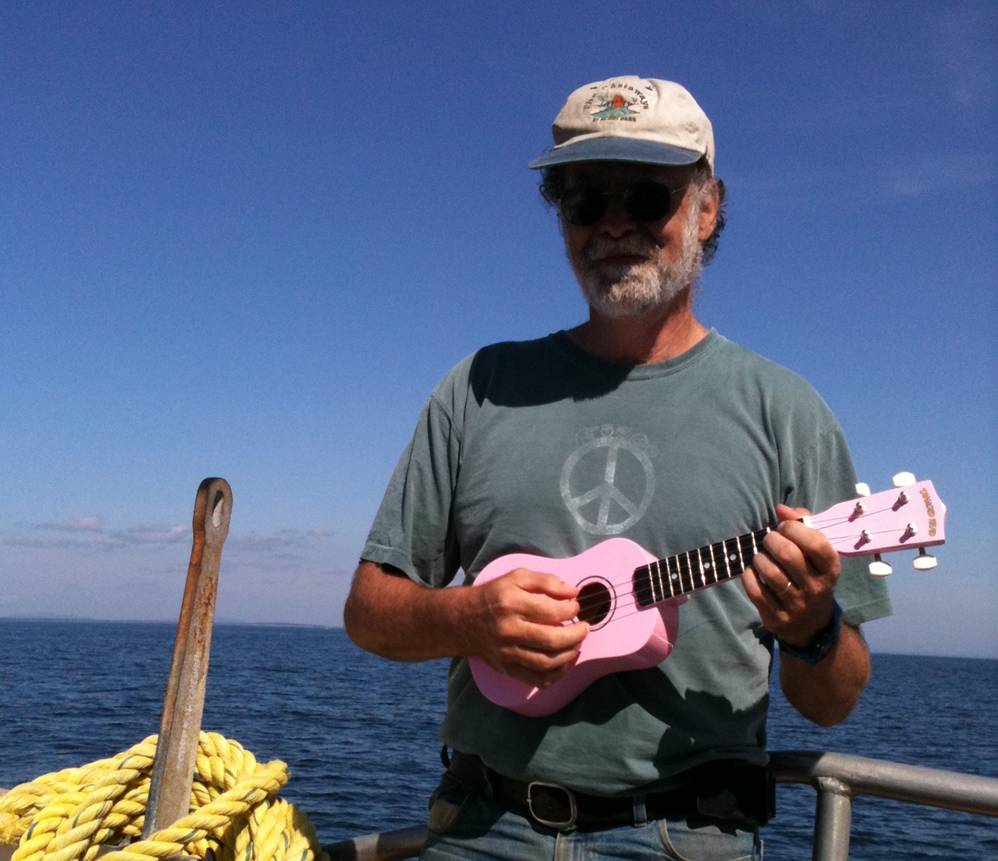
Of course, not all the creating was arduous.  Selecting the quote for the Order of Service, and choosing two readings was like a great walk in the woods of wonderful thinkers.  The most fun creative element, though, was asking the Montpelier Ukulele Players to play the prelude, postlude, and special music.   This is the group my husband Bob plays with, and I put in the request through him.  At first, he told me there might be eight musicians.  On Friday before the service, Bob said he thought maybe 12 would show up.

My ukulele playing husband got his Montpelier ukulele players to join him at church.

My ukulele playing husband got his Montpelier ukulele buddies to join him at church.

Turns out, there were 16 ukulele players on the chancel that day!   I am telling you, those ukulele players spread quite a bit of happiness, especially with the postlude — “Keep On The Sunny Side” — which had the congregation singing and clapping along.   So, yay for creativity!

A Worthwhile Message:  The main driving force for me in my happiness work is the looming threat of climate change, and my belief that understanding and cultivating personal happiness and systemic well being (ie, a Gross National Happiness paradigm) is a positive way to both limit the extent of environmental devastation and help us cope with unavoidable tragedy.  So it was pretty clear to me from the get go what direction my sermon would take.

It may seem counter-intuitive to focus a happiness talk on climate change, which can be a seriously depressing topic.  Truthfully, I felt a little bad when I finally stepped to the pulpit, after the ukulele music and a rousing choir anthem had the congregation laughing and clearly in an upbeat mood.  I thought, wow, they are not going to expect the direction this sermon will take!  But I had faith in the worth of my message, so I was surprisingly calm as I plunged in.  By the end, I think the congregation was once again feeling hopeful and upbeat, thanks to the power of happiness research.

Some of the climate change information I cited in the sermon came from a January 2012 report from in the New York Times.  I’ve found an update in the paper re one of the items I had cited (extreme heat in Australia).  Here’s an excerpt:  “But the report from the Climate Commission, titled ‘The Angry Summer,’ argues that the frequency and ferocity of recent extreme weather events indicate an acceleration that is unlikely to abate unless serious steps are taken to prevent further changes to the planet’s environment.”

Sadly, it doesn’t seem as though my sermon topic will become irrelevant any time soon.  So I’ll be hitting the road, sharing this same basic message with Unitarian Universalist congregations in Barre, Vermont on April 7th and Hartland, Vermont on April 14th.  Maybe I can even go to my sister Kathy’s church in Philadelphia!

Not so long ago, I couldn’t possibly have imagined I’d be writing a sermon.  While I may sometimes get preachy (ahem),  that doesn’t mean I ever aspired to the ministry.  Growing up, I never even went to church except on Girl Scout Sundays, when I felt very uncomfortable and out of place.

As an adult, though, I began to long for spiritual community.  When I decided to get a Masters in Mediation, I intuited that I could be more present and helpful to folks in conflict if I spent some time healing my own psyche.  This belief led me to the Unitarian Church of Montpelier, which has been my spiritual home since 2005.

When I finished my graduate degree, after devoting many months to studying the relationship between suffering and mediation, I bought a cheerier book: Dan Gilbert‘s Stumbling on Happiness.   It was a momentous purchase, as Gilbert’s book opened the gate to my happiness path.

On Sunday March 3rd 2013, the happiness path will wend its way through my spiritual home as I step into the pulpit as the guest minister at my church.  My sermon topic is, “Is Happiness Escapist, or a Valuable Spiritual Practice?”  (What do you suppose my answers will be?)

It isn’t unusual for members of the congregation to serve as guest ministers when our own minister Mara Dowdall  is away.  Nonetheless, I’m very pleased and honored to take my turn in the pulpit.

Even more exciting was receiving a second invitation to share my happiness sermon  — this time, from the Universalist Church in neighboring Barre, Vermont on Sunday April 7th.  I absolutely view pursuing happiness as a spiritual practice, so readily accepted this invitation as well.

Far left, my sister -- The Reverend Kathy Ellis, taking social justice concerns to the street

Far left, my sister — The Reverend Doctor Kathy Ellis — taking social justice concerns to the street.

But I do wonder, as I write the sermon, how the heck do my sister (Kathy Ellis, minister of the Unitarian Universalist Church of the Restoration in Philadelphia) and Mara and the other ministers I know do this week after week?  Writing a sermon is a daunting task!  And I know through my sister and through Mara that sermon writing is just the tip of the ministerial workload iceberg.

Lest you feel too sorry for them, though, I have to say the odds are good that they both love their jobs.  Indeed, in September 2012, Steve Denning wrote an article for Forbes on the “Ten Happiest Jobs.”  At the top of his list: clergy.  Denning notes, “The least worldly are reported to be happiest of all.”

Here’s the rest of his list: 2) firefighters; 3) physical therapists; 4) authors; 5) special education teachers; 6) teachers; 7) artists; 8) psychologists; 9) financial sales agents; and 10) operating engineers.

Only the last two seem at all surprising, though I think a lot of men I’ve known would love being operating engineers.  Says Denning, “Playing with giant toys like bulldozers, front-end loaders, backhoes, scrapers, motor graders, shovels, derricks, large pumps, and air compressors can be fun. ”  Yup, I can easily imagine my husband happily playing with these grown up toys …

Denning, who earlier wrote an article on the 10 most unhappy jobs, speculated that “the difference between the happiest jobs and the most hated jobs” is that “one set of jobs feels worthwhile, while in the other jobs, people can’t see the point.”  Makes total sense to me.

I also did a little bit of my own completely non-scientific research by asking my sister, Mara, and three other minister friends what about their jobs makes them happy.  Their thoughts follow.  But before you read what they say, pause for a moment to consider what the common thread or threads might be.  Some of what this group shared might surprise you.

Now, their responses:

Reverend Doctor Kathy Ellis:  “Ministry is about connecting – with people, with meaning, with the still small voice. It allows, almost requires learning and growth.  It is varied. Yesterday I even went to a movie as part of my work.”

Reverend Mara Dowdall:  “Some quick thoughts about what is ‘happy’-inducing: 1) meeting fascinating and lovely people and hearing their stories; 2) having the privilege to walk with people and be present for many holy moments; 3) reading poetry for work; 4) being challenged; and 5) variety: each day is different.”

Reverent Laelia Tawnamaia: “I agree with Kathy: love, meaning-making, justice advocating, creativity, flexibility, people, community, and soul growth.”

Reverend Susan Veronica Rak:  “I am happy in my work as a minister when all of me gets tapped into… I find all my ‘loves’ – story, art, creativity, beauty, weirdness, reverence, awe – come into play  in preaching, pastoral care, administration, etc. – and some of my greatest dreams and fears are in play, too. And that is what it is to be human.”

Reverend Janet Smith Peterman:  “It’s interesting that all of us are women and I wonder if that makes a difference. I think, too, that part of what is so satisfying is that I can use my creativity; the people connections are often at moments in their lives where something really significant is going on; we get to reflect on the larger sweeps of life and meaning; and, at least in the work I do, get to help communities find life/new life and redevelop.”

So, how did their answers fit with your expectations?  Certainly some of their responses were what I would expect (“holy moments” and “soul growth,” for example, as well as meaningful connections with others) — but what really struck me was the emphasis on creativity, variety, and continual learning.   It sounds very much as though they may frequently experience what Mihaly Csikszentmihaly describes in this TED talk as “Flow,” or “the secret of happiness.”

I also think it’s very significant that all five ministers described a variety of activities during their work days — activities that have also been proven to increase personal happiness.  Variety itself is a key to sustaining happiness, according to Sonja Lyubomirsky — mixing it up with our happiness activities keeps us interested and engaged in a way that is vital to continued higher levels of happiness.

Hmmmmm …. maybe I should pursue the ministry after all!  Just kidding.  Mostly.  Though I can definitely see the appeal in ministerial work, my calling in life is to preach happiness.  I expect to enjoy my time in the pulpit, but it’s definitely only temporary.

*****

By the way, for those of you who read my previous post on happiness for the goose and gander, I want to share my plan for “special music” on March 3rd: I’ve asked my husband Bob and his fellow ukulele players to perform “Bring Me Sunshine,” performed in this video by the Jive Aces.  This song always brings a smile to my face.  Perhaps you’ll enjoy it as well!

Right before the latest big blizzard, I read a post from a Texan who wrote that it was 60 degrees and sunny in his neck of the woods that day.  “Why would anyone ever want to live in the northeast?” he asked.

My internal response was, “Texas?  Really?  Are you kidding me?”  Large swaths of Texas have been on fire the last few years.  The state as a whole has lately suffered crushingly hot temperatures and frightening drought.  Why would anyone ever want to live in Texas?

As they say, different strokes for different folks.

When it comes to happiness, I suspect our differences emanate from a soul level.  Certainly each of us needs to chart our own distinct happiness paths.  As Sonja Lyubomirksy observes, “there is no one magic strategy that will help every person become happier.  All of us have unique needs, interests, values, resources, and inclinations that undoubtedly predispose us to put effort into and benefit from some strategies more than others” (The How of Happiness, p.69).

Or, in more folksy terms, what’s good for the goose is not necessarily good for the gander.  Or is it?

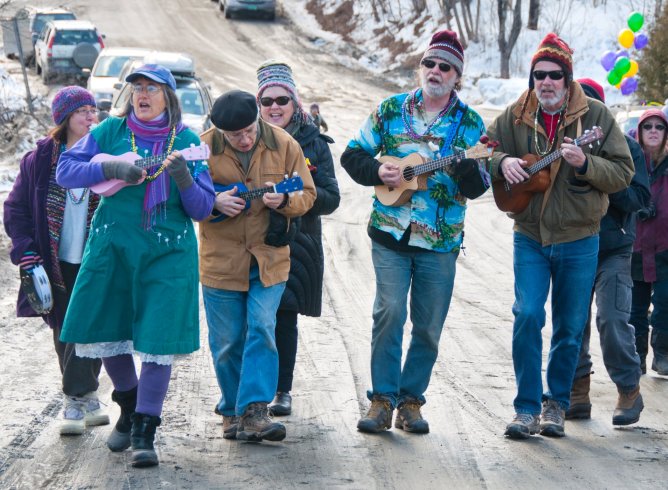
The Gander. That would be my husband, Bob.  This coming Saturday afternoon, he will undoubtedly get a huge happiness boost by once again leading his merry band of ukulele players in the Maple Corner Mardi Gras parade.  I’m guessing that getting into the flow of mastering the ukulele is partly why this experience gives him joy.  Also, I know he appreciates this opportunity to contribute to our community’s vitality.  Because performing makes his uke brothers and sisters happy too, by organizing this event, Bob further benefits by giving them this gig.

That's Bob in the Hawaiian shirt in the 2012 Maple Corner Mardis Gras

That’s Bob in the Hawaiian shirt during the 2012 Maple Corner Mardi Gras Parade

Plus, of course, it is just plain fun and not really something that needs to be analyzed.

The Goose is me.  I joined Bob in the parade last year, playing the only instruments I can even begin to handle (kazoo and tambourine); I may march again this year.  But, I’m excited about something radically different this coming Saturday morning:  a gun control rally in front of the Vermont Statehouse in nearby Montpelier.  Fun is not my strong point, alas.  I’m more in my element as a rabble rouser — or, as I might reframe it in positive psychology terms, I really like “having a purpose.”

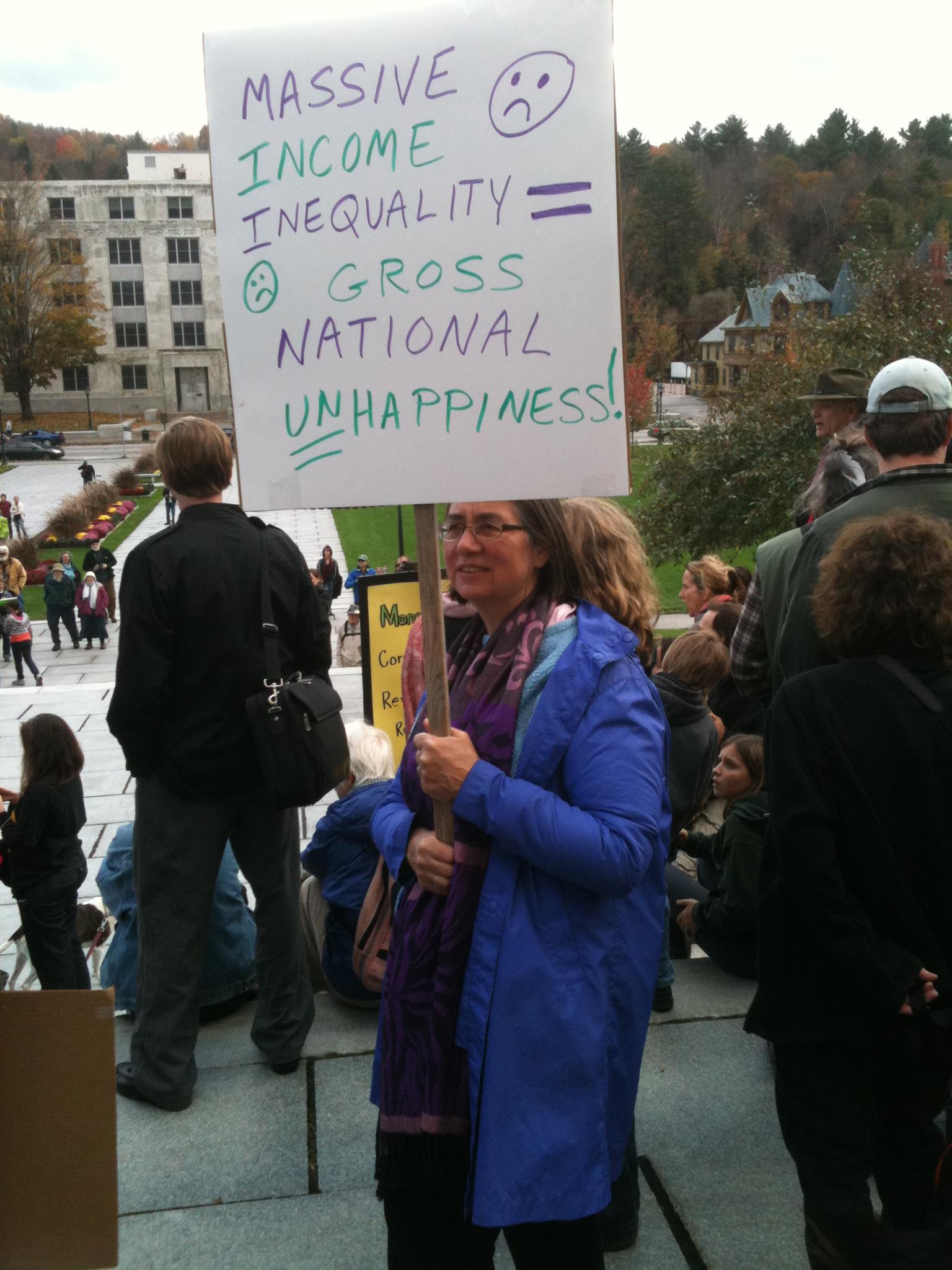
At the Vermont statehouse for a 2011 Occupy protest.

That’s me at the Vermont statehouse for a 2011 Occupy protest.

These differences between my husband and me play out most Sunday mornings.  While I head off to sing in the church choir and get a weekly booster shot of support in leading a good life, Bob heads for his ping pong club and several hours of very vigorous exercise with his buddies.  His table tennis time is just as sacred to him as my church attendance is to me.

These musings reminded me of the following section on the Pursuit-of-Happiness website about Martin Seligman and different levels of happiness:

“Seligman’s bottom line is that happiness has three dimensions that can be cultivated:

1. ‘The pleasant life’ is realized if we learn to savor and appreciate such basic pleasures as companionship, the natural environment and our bodily needs.
2. We can remain pleasantly stuck at this stage or we can go on to experience ‘the good life,”’ which is achieved by discovering our unique virtues and strengths and employing them creatively to enhance our lives.
3. The final stage is ‘the meaningful life,’ in which we find a deep sense of fulfillment by mobilizing our unique strengths for a purpose much greater than ourselves.”

Writing this blog, and looking at my husband’s and my choice of activities through the lens of Seligman’s three levels of happiness, I now see that what’s good for the gander can indeed be good for the goose — just not in the way I’ve interpreted this cliche before.  I always thought it meant the goose and the gander should be doing and liking the same things.  Now, I see that by doing and liking different things, the goose and the gander can help each other expand and enrich their levels of happiness.

Nearly everything I’ve read about what makes people happy stresses the importance of relationships, and good connections with others.  Perhaps one reason this is so is because other people inevitably provide us with more varied happiness opportunities.   We help each other cultivate different dimensions of happiness.

I definitely need to nurture “the pleasant life”  more.  Bob helps me be more playful, and that is definitely a good thing.  So … hand me a kazoo.  And see you at the rally.

Two weeks ago, I picked up two books from our local post office.  I had ordered them for an online course called “The Philosophy and Psychology of Happiness” offered by The Pursuit of Happiness Project.   When I told our postmistress about the course (because, it’s that kind of town, where we take the time to chat with each other), she exclaimed, “But you’re already happy!”

Well, I’ve been working on it for a while now, and I think it’s a fair assessment to say I’m a reasonably happy person.  But happiness is a process, not a destination.  I’m always learning how to stay on that path myself, as well as discovering new ways to help other people better understand and apply happiness tools.

For example, in this course, I finally grasped the distinction between Positive Psychology research and the Science of Happiness.  It’s not so hard — Positive Psychology, as its name makes clear, focuses on mental and emotional states.   It’s very internal.  Whereas the Science of Happiness includes much more physical aspects,  like the effects of certain foods and the need for sufficient sleep.  This distinction helped me appreciate that studying happiness is quite broad.

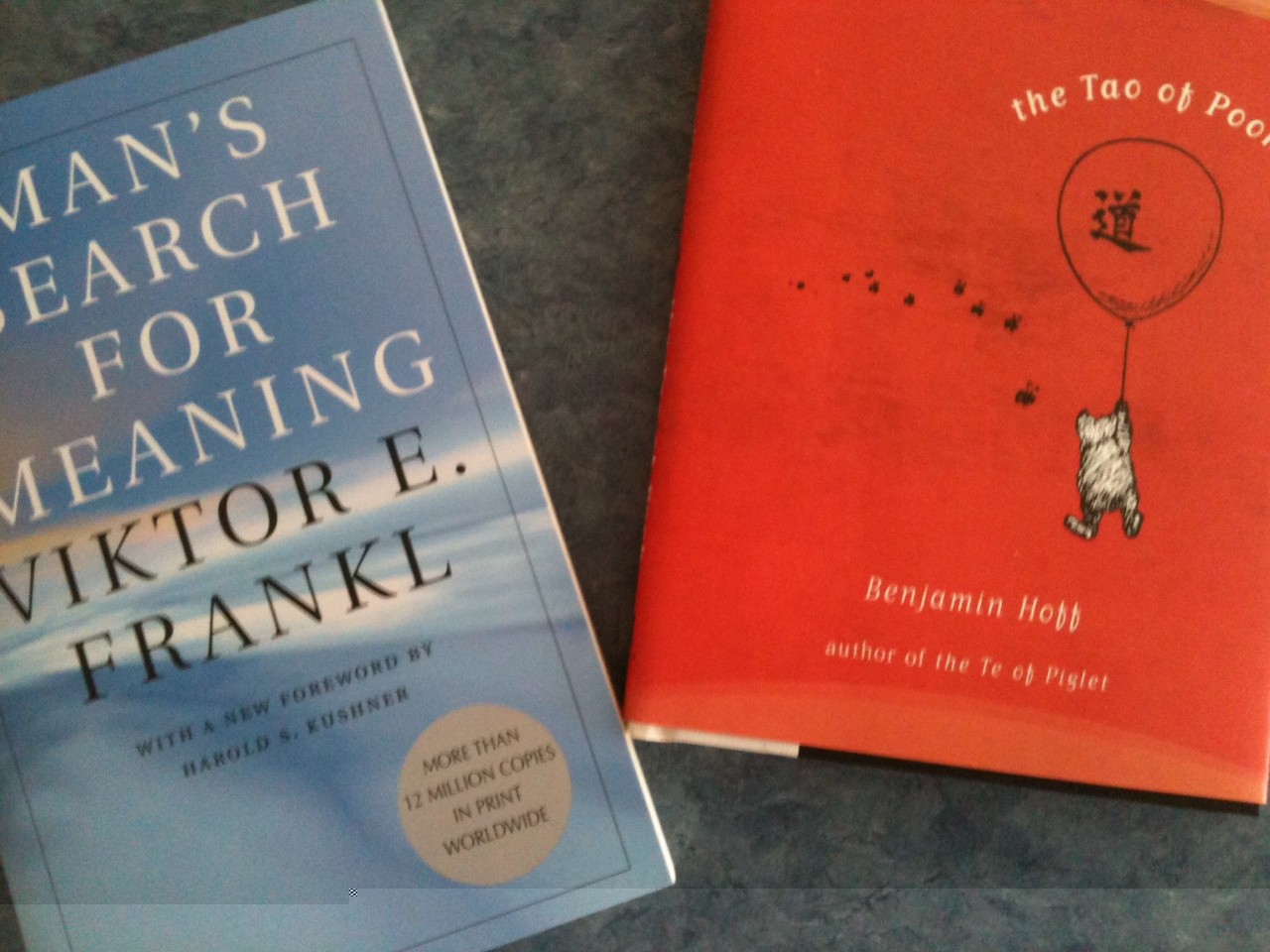
The two books I got that day further illustrated the breadth of happiness studies: from Holocaust survivor Viktor Frankl‘s seminal book, Man’s Search For Meaning, to Benjamin Hoff‘s light-hearted philosophical gem, The Tao of Pooh.   Seeing them side-by-side amused me.

The two books I needed for my online course in happiness.

The two books I needed for my online course in happiness.

This class also gave me the opportunity to reflect on one of the most vital components of human happiness: lifelong learning.  As one researcher put it, “We have big brains, and we want to use them.”

Not only was I clearly happier myself while immersed in this course, but I also got to study Mihaly Czikszentmihalyi work on “flow” — or, having an “optimal experience,” a time when we are so engrossed by our activities that we lose track of time.  This flow can happen while creating art or working out or many other experiences.  Learning provides great flow options, because flow can arise when the task at hand is somewhat challenging but ultimately doable.

After reading about flow, I got to experience it!  On the final day of class, we had to present happiness power points.  Because I have never done a power point before, this was a challenging assignment.   Of course it was doable, but it was enjoyable and meaningful.  I spent many more hours creating my power point than I had allotted — hours that I look back on fondly.  I was in the flow, and that is a happy space.

In fact, though it was a lot of work, I miss the whole class — both the learning itself and our community of students and teachers (connection is, of course, another critical happiness piece).  It was very special to spend the week in the online company of others who share my passion for happiness research.  This cohort contributed to my learning through some rich discussions, especially on the topic of optimism (which is so valuable but can also veer uncomfortably close to denial).

This wasn’t my first online happiness course.  Last year with my daughter in Alabama, both before and after her baby was born, I studied “Sustainable Happiness” on my laptop — often with an infant sleeping on my chest.  Here, too, I combined multiple happiness strategies — which is a good thing, because a third — sleep! — was in short supply.

Another independent study experience that gave me great joy was learning to speak Latin American Spanish through the recorded Pimsleur method.  The pleasure of learning was again enhanced by connection, as my husband joined me for most lessons.  We were highly motivated to learn, because our son at the time had a strong relationship with a woman in Venezuela and her two children, whom we visited twice.  I took pride in my achievements, deeply enjoyed the Spanish language, and had fun speaking Spanish with my husband.

Sadly, after the Venezuelan relationship broke up, we lost our motivation.  I still keep the CDs in the car with me, and keep thinking I’ll get around to studying some more … but it hasn’t happened.  Maybe I should make that one of my happiness strategies that I measure.  Devising accountability tricks (like stickers on a calendar) helps me stick with a new activity.

Here’s something else I’m intrigued by: the multitude of online courses that are many universities are offering at no cost.  I’ve read about this in the New York Times, and heard a great NPR piece on these courses last October when I was driving to meet Linda Wheatley and Paula Francis to join them for part their 600 mile Pursuit of Happiness Walk.  Right before I hooked up with them, they had met with the Positive Psychology Center at the University of Pennsylvania — home to Martin Seligman, the father of Positive Psychology.  Paula and Linda told me that those folks are considering offering some online courses through the free platforms.  Exciting!

Or should I say, “Que bien!”

It pleases me no end that savoring — just taking the time to smell the roses and truly enjoy life’s pleasures — is a scientifically proven strategy for raising our personal happiness levels.  How cool is that?

Perhaps you’re thinking, “Science? Really? What science?”  Fair enough.  I have zero scientific expertise.  Instead, let me offer up the Mayo Clinic.

In an article entitled, “How To Be Happy: Tips For Cultivating Contentment,” the Clinic cautions that being happy takes “practice, practice, practice.”  They offer multiple options for “choices, thoughts and actions” to get happier, including savoring:

“Don’t postpone joy waiting for a day when your life is less busy or less stressful. That day may never come.  Instead, look for opportunities to savor the small pleasures of everyday life. Focus on the positives in the present moment, instead of dwelling on the past or worrying about the future.”

Since becoming mindful of savoring, I’ve noticed that it is almost always an option, regardless of immediate circumstances and surroundings.  This makes it a particularly helpful tool.  In crabby-making situations, if I remember to look around and drink in whatever beauty or joy is at hand, I can get an immediate happiness  boost.  As I write, I can pause to more deeply appreciate the Ravi Shankar music playing on Pandora or to breathe in the aroma from a pine scented candle just to my right.  No big deal — it just takes intention and attention.

Of course, what and how you savor will likely be quite different from my choices.  My scented candle would give some of my friends a headache.  To me, that’s part of the attraction of happiness-building activities — they are based on science, but you can choose strategies that most appeal to you and apply them in your own unique way.

Another lovely aspect of savoring is that it need not be restricted to the present; you can also relish past memories and anticipate future pleasures.  Thus, as Sonya Lyubomirsky observes, “when you master this strategy, you ‘will always have Paris.'”

Lyubomirsky lists savoring as “Happiness Activity No. 9”  (out of 12) in The How of Happiness which I listened to last March while driving from Vermont to Alabama for the birth of my granddaughter.  I think I’ll always remember how much I was able to savor the beauty of a perfectly ordinary rest stop in Virgina that day.  The clouds and the wildflowers were so normal, and so sublime.  Drinking in the beauty that surrounded me filled me with gratitude.

Our little Christmas baby.

Our little Christmas baby.

Since Madeleine was born and moved in with us, I have had countless opportunities for savoring.  However, when I interviewed environmental activist Kathryn Blume for an article in Vermont Woman, she suggested I might also observe how the baby herself provides a case study for human happiness.

For example, one day I headed up the stairs to her room.  Knowing how pleased she would be to see grandma, I made lots of noises to give her plenty of time to anticipate my arrival.  When she finally saw me, she squealed and jumped with pleasure.  It was quite amusing!  I come in her room to greet her almost every day, but building in the anticipatory savoring made the experience so much sweeter for her, and me.

She has no problem savoring the ordinary.  Ordinary, extraordinary — it’s all the same to her.  One of her favorite toys right now is an old jewelry box.  It’s just decorated cardboard, but really — how charming is the silky lining, how solid it feels in the hand, and what an ingenious opening mechanism!  Madeleine reminds me daily that savoring opportunities abound.

Now that the holiday decorations are up, we have a special set of objects and experiences to savor.  Through Madeleine’s eyes I have learned that the snow in the Santa Snow Globe is actually teal, that the Santa wine bottle cover has bells that ring (and a beard that can be pulled off), and that the little blue ceramic Santa has a bell that can almost always coax a baby smile.  I’ve always loved Christmas lights, but I don’t know how much I actually savored them.  Now, following Madeleine’s lead, I take the time to hold her as we both gaze and savor the amazing reality of colored lights.  Wow!  How glorious!

And of course, I keep savoring her, storing up these precious memories — so I’ll “always have Paris.”

A Serendipitous Note

Gratitude is another one of my favorite happiness tools, and this morning I was reminded of a person to whom I owe much gratitude:  Dr. Lynn Johnson, who introduced me to the importance of savoring.  In November 2010, I took a daylong seminar from him (“Happiness: How Positive Psychology Changes Our Lives”) and later read his book, Enjoy Life.  Today I received a link to his own blog also on savoring.  Naturally, Dr. Johnson’s take is very different from mine (warning: it may make you hungry).  Between his words and mine, perhaps you’ll have a whole new approach toward smelling roses, literally and metaphorically.

No, this is not an early Christmas essay about handmade gifts or alternative holiday rituals.   Rather, I am moved to write about giving and happiness — specifically, my gratitude at finding a way to help survivors of Hurricane  Sandy despite my constrained finances.

In the past, when major disasters struck, my normal reaction was whipping out my American Express card and charging a donation, or several donations to organizations with complementary missions.    Of course, that was a good thing to do.  Indeed, just this morning NPR broadcast a story on the desirability of sending money rather than stuff to assist Sandy survivors.   Making a cash donation gave me a happiness boost, and, much more importantly, helped the recipients on their long road to recovery.

Right now, though, the American Express route isn’t viable.  I am not yet making enough money through my happiness work to shoulder my share of our household bills.  No complaints,  I’m sure I’ll get there — but in the meantime, I’ve put a lot of financial stress on my husband.  I’ve got to fix things on the home front before sending money elsewhere.

Still, I wanted so much to help.  I  believe the suffering families in New Jersey and New York are victims of climate change, something each and every one of us contributes to — which is to say, I feel a sense of obligation to them.  What could I do?

The answer came late last Saturday afternoon.  Through an email list serve, I learned of a truck leaving Montpelier for the Rockaways the following afternoon.  This driver had a list of requested donations, including blankets.  Blankets!  Yay, I had  several extra warm and cozy blankets which I washed, dried, folded, bagged, and delivered to the truck driver.  Small though this gesture is in light of the need, I was nonetheless grateful for this opportunity to help.

It’s a virtuous cycle.  It’s hard to feel unhappy and grateful at the same time.  And, almost every list of happiness strategies I’ve seen stresses the importance of giving to others as a way to feel better.  I’m willing to bet that Winston Churchill was no happiness expert, but this quote attributed to him does a good job of capturing the importance of generosity: “We make a living by what we get. We make a life by what we give.”

I’m also pretty sure that Mother Theresa was not, alas, very happy, but no one could argue that she wasn’t generous.  She knew that,  “It’s not how much we give but how much love we put into giving.”

That strikes me as a valuable insight.  Is the giving heartfelt?  If we are grudging or callous, our gifts may help the recipient, but we aren’t likely to get much of a happiness boost.  Not that a happiness boost should be the goal.  While giving can bestow happy feelings on the donor, it really needs to be about the recipient first and foremost.  No strings attached, and certainly not an opportunity to offload unwanted junk for the giver’s own benefit.

A gift from the heart I was so pleased to receive — a heartfelt gift from a four year-old.

Okay, bearing that in mind, I’ve been mulling over ways to give, including cash.  In my community,  some neighbors needed extra financial help recently to pull through some daunting challenges, and many friends and neighbors donated much needed money.  But we also provided meals.  Though I’m not a great cook, I did my best to concoct tasty meals for my friends.  This is stressful for me, thanks to time and money shortages and my insecurity as a cook — yet,  always, I felt really good about having climbed on board the meal train.

Giving can be simple or elaborate.  After the Haitian earthquake, a neighbor up the street organized a fundraising “cabaret” at our community center.  She went to a lot of trouble — hanging curtains, bringing in more intimate furniture, lining up refreshments and musical acts.  The result was memorable, an evening that raised a lot of money for Haiti and strengthened our local community as well.

There was another benefit concert a few years ago for a young family whose house had burned down. Mom, dad, and two toddlers just barely escaped into the -14 degree January night.  In connection with the concert, I solicited donations for a silent auction, which raised another $1,000 or so to help them rebuild.   I am so glad I put the effort into that event; I still feel a special connection to this now happily thriving family.

Last year, when Vermonters were hammered by Tropical Storm Irene, I was especially impressed by the many, many people who pitched in to do the physically hard and unpleasant work of  mucking out nasty flood debris.  For a variety of reasons, I never did that.  I did donate money; went to fundraising concerts; gathered up books to take to help restock a flooded library; and helped my church target monthly congregational giving to both general flood relief and relief for hard-hit farmers.  But, because I didn’t do any of the physical clean up, my efforts never felt sufficient.

Okay, so I’m not a giving super hero — and maybe that’s just as well.  A few months ago, I interviewed Kathryn Blume for an article in Vermont Woman.  “We don’t serve anyone by burning ourselves out,” she told me.  “Any cause we engage in is going to be bigger than we are.  We can give everything we’ve got, and it will still be there.”  An astute observation, for sure.

Last week I interviewed Paula Francis and Linda Wheatley for an article to be published in Vermont Woman  in February.  In early October, Paula and Linda completed a Pursuit of Happiness Walk from Stowe, Vermont to Washington, D.C. — a walk which was filled with giving.  Their gift to others was listening to the heart-felt reflections on happiness from hundreds of regular folks.  In return, they received the gift of witnessing individuals open up and share their hearts.  There were plenty of tangible gifts, too — like the owner of a diner where they had stopped who came running after them to make sure they had pretzels — but the intangibles were what made the walk profound.

So how many ways are there to give?  Is it infinite?  My daughter posted a super cool video on my Facebook wall of a young man performing 22 acts of random kindness to celebrate his 22nd birthday (my daughter proposes making this a new family tradition).  There are a lot of good ideas in here!

While working on this blog, I found an Arab proverb which loops back to my dilemma of what to give if not money AND addresses the “heart” of my message here:   “If you have much, give of your wealth; If you have little, give of your heart.”

How about you?  What does giving mean to you?

Is happiness escapist?

This question, which came up at a happiness workshop on a lovely Sunday afternoon in Vermont a little over 24 hours before Super Storm Sandy hit the U.S.,  carried extra weight in the following days as we witnessed the storm’s massive destruction and personal tragedies.  Most painful was the news about a Staten Island woman whose two young sons were swept from her arms by powerful waves as she tried to carry them to safety.  Both little boys drowned.  I cried at her despair.

Even worse, though, is the foreboding I feel.  I know I am not alone in believing Sandy is the new “normal.”  I suspect there will be many more neighborhoods aflame, beautiful beaches and treasured covered bridges washed away, and toddlers dying.

And, we all have our normal garden variety of suffering to deal with: aging, failing bodies; money worries; heartbreak from our own and others’ failings; and, ultimately, death.  For all of us.

In fact, I’m feeling a little sad while I write this blog.  Yet, on both a micro and macro level, my answer to the title question is a resounding no.   Quite the opposite, really.  For me, cultivating happiness, positivity, and well being is a moral imperative on both the big systemic and deeply personal levels.

Some of the water jugs we had filled in case Sandy knocked out our power for an extended time.

Why?  Most urgently, because, on both a personal and societal level we are chasing the wrong goals: money and material success.  I know that is not all that many of us seek.  We are also spiritual beings, who treasure and nourish relationships and the opportunity to do good and to create.  And we are physical creatures, who dance and have sex and go to yoga class. Nonetheless, because our economy is fixated on growth, the pressure on us to buy and spend is enormous.  The resulting consumerism is trashing the environment.

To begin to ameliorate the insidious, unpredictable effects of climate change, we must reject the sacred cow of a growth economy.  Equally, we must understand that a rising Gross Domestic Product (GDP) is not a valid  indicator of a flourishing society.  This is not a new idea; Bobby Kennedy eloquently articulated the flaws of GDP way back in 1968.  I’ve watched a video of his GDP speech many, many times and it still moves me to tears.  Today, viewing it again, I want to add “the ravages of a hurricane” to RFK’s list of what contributes to a “healthy” GDP.

One other quick primer on how destructive consumerism is:  “The Story of Stuff.”  If you haven’t watched it yet, I highly recommend investing the 20+ minutes this smart, sassy video lasts.  And, BTW, happier people shop less.

But what will take the place of a growth economy, consumerism, and GDP? Something needs to fill the vacuum.  That something should be a Gross National Happiness (GNH) paradigm — or, in more politically palatable terms, the genuine well being of people and the planet.  Systemically, embracing happiness is embracing a sustainable future.

On the personal level, first of all, I have to question what good it does anybody for me, or you, to be unhappy?  How is that going to help fix anything?

But it’s not just me.  Sages from across the millenia — the Dalai Lama and Aristotle, for example — say that happiness is what all humans desire.  The Dalai Lama has also written that whenever we interact with another person, we can add either to that individual’s happiness or to their unhappiness.  Thanks to mirror neurons, we are much more likely to boost another’s spirits if we ourselves are in a happier place.

When I was at the national happiness conference in Seattle in August, I learned a simple but profound exercise from Scott Crabtree, proprietor of “Happy Brain Science.”  Scott divided the group into paired-up “A’s” and “B’s” and then instructed the “A’s” to maintain sober facial expressions while looking at the “B’s” who were instructed to smile, smile, smile at their partners.  You can guess, it is just impossible to not smile back!

Of course, I am not recommending fake cheeriness or inauthentic saccharine behavior.  What I am suggesting is, as Christine Carter puts it in Raising Happiness, that we need to “put on our own oxygen masks first” when it comes to helping others be happier.

Thanks to positive psychology research and multiple other studies on human behavior, we now know that nurturing happiness builds our own ability to respond to crises and to serving others in their moments of need.  Positivity breeds greater resilience, and the ability to see and appreciate silver linings.  Happier people are kinder — and kinder people are happier.  Happiness is also good for our health, and, damn, sometimes we need to be strong and healthy to fight the good fight!

Another powerful argument for strengthening our happiness muscles is the value of mindfulness.  Taking time to meditate and build personal awareness is one of the most important happiness strategies any of us can adopt.  With mindfulness comes greater compassion (for ourselves and others), more inner peace, less stress — and, the ability to make better decisions.  “To lead a happy life, we need to make good choices,” write father and son happiness mavens Ed Diener and Robert Biswas-Diener, “and this involves the recognition that problems arise, even in good circumstances”  (Understanding True Wealth, p. 18).

The circumstances in North Central Vermont were very good indeed — a sunny, warm, late autumn day — as Sandy was headed our way.  Even way up here, we were warned of very high winds and the likelihood of losing power.  It was time for mindfulness and good decisions: after watching Tropical Storm Irene devastate much of Vermont last year, we knew that if the power went out, it could stay out for a long, long time.  Our wood stove and gas range meant we could stay warm and cook hot meals.  But our well needs electricity to work, so we stockpiled pitchers, jars, trash cans, and bottles of water to drink, clean, take care of the baby, and flush the toilets.

The storm wobbled a bit to the west and we never needed all that extra water.  But the threat was — and is — quite real.  My sister Peggy in New Jersey is now in Day 8 of no power, no heat, no water.  It is, she says, “the pits.” I can’t regret for a moment my choices to stockpile water; I am grateful for mindfulness and the awareness to “be prepared.”  (After all, I was once a Girl Scout!)

Diener and Biswas-Diener also observe, “challenges look easier when you are happy.”   I’ll tell you something else that makes my challenges look easier: coffee!   I don’t drink a lot, but, oh, that first cup in the morning is a savoring experience every single day.  During our preparations for Sandy, I became very mindful that I had wholly inadequate coffee preparations.  Next time, I will make even better choices, stocking up on coffee (ground!) as well as water.

That’s not a moral imperative, of course — but, it will help me keep smiling!

Gratitude.  Aaaahhhhh.  I just love moments of gratitude.  How fortuitous, then, that practicing gratitude is a scientifically proven method of deepening one’s own well of happiness.

Many years ago, long before I’d even heard of positive psychology, I had a gratitude practice: noting in a daily journal what I was thankful for.  But I confess, I only journalled for a few days, which couldn’t possibly have done me much good.  In The How of  Happiness, Sonja Lyubomirksy stresses the importance of choosing happiness activities that will keep you engaged for a significant period of time in order to actually make a difference.  Rick Hanson, a neuropsychologist and author,explains the brain science involved in an article called “How To Trick Your Brain For Happiness.”  Here’s an excerpt from that article, recently shared through The Daily Good web feed:

“Just having positive experiences is not enough to promote last well-being. If a person feels grateful for a few seconds, that’s nice. That’s better than feeling resentful or bitter for a few seconds. But in order to really suck that experience into the brain, we need to stay with those experiences for a longer duration of time—we need to take steps, consciously, to keep that spotlight of attention on the positive.”

Happily, while listening to Lyubomirsky’s book during my long drive from Vermont to Alabama last spring, I had an “aha moment” — rather than write about happiness, I would pull out my watercolors and create a weekly gratitude painting.  Perfect!

Okay, so the weekly painting turned into a monthly painting and I skipped April altogether (hmmm, could that have something to do with helping my daughter care for a newborn???) — but I stuck to it.  It’s working.  I have weeks to contemplate the subject of my next painting; thus, gratitude is frequently on my mind.

My first gratitude painting. I am often surprised by the subject matter that comes to the top of the list when I sit down to paint.

So my mental pump was primed when I stumbled on Ken Wert’s “Meant To Be Happy”  blog list of 48 unconventional things for which he is grateful.   His list  ranges from toilet paper (this makes me smile) to gears (yeah, okay, I can see that) to color (yes, yes, my heart is singing!) to hugs and voice (deep sighs of appreciation).  It’s a pretty darned good list.

Wert’s list, and the many expressions of gratitude I heard at the Happiness Conference in Seattle, made me wonder: what are other people grateful for?

To find out, I put out a few group emails, and changed the question on the blackboard in front of The Happiness Paradigm to, “What Are You Grateful For?”   Naturally, the blackboard collected shorter answers: “Obama,”  “Fall in Vermont,” and “blankets.” The written answers, on the other hand, are wonderfully thoughtful — perhaps precisely because writing takes more thought, and perhaps because almost everyone who responded is involved in some way with the happiness movement.

Their responses are below.  Before you read them, though, I’d like to ask, what are YOU — the person reading this, right now — grateful for?  This collection is neither scientific nor comprehensive, but the more answers the better, because this is good food for thought for all of us.  So please feel free to post a comment or send an email with your own answer to this question.

Now, in no particular order, here are some gratitude answers thus far:

  • Grateful for the fact that I’m alive and well each day. And grateful for the opportunity to work on this (happiness) movement 🙂
  • I am grateful for my Mom who taught me I can do anything!
  • Immense gratitude to all who call forth the most thriving possibilities for humanity and the fullness of life. The call to happiness and compassion has deep roots even beyond the measurable and our time together was soul food.
  • Grateful for all the help from near and far in taking care of a new baby — babysitting, onesies, toys, students taking care of the baby, support from family, etc.  Can barely name it all!
  • I am thankful for old clothes that seem to melt into my body this cold September morning, one that marks the beginning of Fall, a season I love best in New Mexico. And I am grateful for the happiness class I began teaching last week on the anniversary of September 11th. I am grateful that in spite of such darkness in the world we can gather in places like Albuquerque, Seattle, and Maple Corner,Vermont to promote happiness.
  • I am grateful for: 1)  My spiritual teacher Sant Kirpal Singh, and my meditation practice.  2)  Fran Joseph’s uplifting Laughter Yoga Certified Leader training last weekend–and Laughter Yoga itself.  3)  My kindred-spirit office mates.
  • Sleep — it’s like a miracle every night.
  • Shooting stars, and being able to see the Milky Way.
  • I am grateful to have such a good friend in YOU!
  • I am grateful that the conditions of my life allow me to participate in the arena of enhancing happiness, compassion, community, and  creativity; I am grateful that I am surrounded my many whose lives are about lifting the spirit of those that they touch; I am grateful that I live in a place where I have access to nature, culture, and really good food; I am grateful that there are so many people in my life that I love and appreciate; and I am grateful for the authors and film makers that create or capture stories that are captivating and meaningful.

    My gratitude painting for May — grateful for yoga!

  • While eating corn on the cob last night I realized how grateful I am for my teeth…many of which are implants.
  • I’m grateful to be reminded how happiness and gratitude go hand in hand ….  And that you keep me on your email & Facebook lists. I’m really appreciative of the work I have, even when it keeps me fairly close to home.
  • Ginny, I’m grateful for your regular messages on happiness and your ongoing curiosity about what creates it; I am so grateful to be here in Vermont where people still work at “creating a more perfect union,” as Bill Clinton reminded us yesterday was a goal of our nation’s founders. I am also very grateful for an amazing partner with a heart bigger than problems we’ve faced together. Together! I’m grateful for that word.
  • Silence, even though I love music.
  • Antibiotics that kill Lyme disease.
  • Right now I am feeling grateful for the people that have a passion and act — you in your store and how you reach out with your great loving positive energy, Linda and Paula and their big walk and listening hearts, and just a ton of people I read about and listen to that open their eyes to understand, then open their hearts for generous selfless action.
  • I always come back to gratitude for the most basic things.  I am again and again overwhelmed with gratitude for my senses – –  For being able to see (beauty of all kinds) and smell (roses, lavender, verbena, pine, chocolate) and hear (music, rain) and feel and taste.   I am also frequently grateful for having a soft clean bed to sleep in, a roof over my head and a safe, warm and dry place to call my own, and a fridge full of wholesome food whenever I open the door.  So many others are not this lucky.

    In June, gratitude for the trees my neighbor planted.

  • To all this wonderful gratitude others have expressed, I will add something to just reflect that gratitude can be for big deep things, but it can also be for little things:  today I’m grateful for pure maple syrup!
  • Today I’m grateful for this space in time:  a few hours to listen to my inner messages, to detach from the pull of outer events, & to process emotions.  So, really, I’m grateful to my Self for choosing to give me this gift in spite of all the pressing “shoulds.”
  • Our own little savings and loan down the street that only makes local loans.
  • Skype.
  • I am truly grateful to be able to be doing this work. Part of it is because of the wonderful people. Part because of the learning experiences. But mostly, because we are so very lucky to have the opportunity to do this work. It’s a grace not many people on this planet get.
  • I just got back from a short meditation retreat in Canada.  While there I got the news that two different old friends had died in last few days, greatly heightening my appreciation and grateful was for my Buddhist practice.  The outlook is so precious in preparing for decline and death, which we all must do; to have a path of joy in such reality is a great gif
  • I’m grateful that my husband thought to take my RAV4 to our neighbor when I drove it ’til there were no more brake pads, and he was able to earn some extra cash, and I was able to avert driving into a ditch.  I’m grateful that we have a generator as we just lost all power with this rain storm.  I’m grateful that I’ve been sober 11+ years, and I’m able to be of service to women who struggle with alchoholism.  I’m grateful to have a Mother-In-Law who is full of joy and laughter.
  •  I am grateful for so much, including my life and that of all beings (may all be at peace).   I am grateful for  connection, blessings, challenges and the opportunity to grow and share.

And me?  So many many things, from that first cup of coffee each morning to the glory of puffy white clouds in azure autumn skies and opportunities to be of service to others.  But, right now, having a six month old granddaughter (who lives with us!) trumps all else.  I am in love, I am happy, and I am grateful for this precious new life.