Genuine well being for ourselves and the planet

Bob and I, freshly married, November 1970.

Bob and I, freshly married, November 1970.

As I recall, the girl sitting next to me in home-economics class was named Diane.  She was a cheery sort, and we chatted amiably while working on our sewing projects.  I was making a pair of identical paisley print bolero vests.  One was for me, I explained, and one was for Bobby Sassaman, the love of my as-yet-very-young life.

“You like him??” she almost gasped in disbelief.  Clearly, Diane did not see Bobby as acceptable boyfriend material.  I saw way more than boyfriend potential: later this month, we’ll celebrate our 44th wedding anniversary.

We still have the vests.

To be clear, when we got married, I believe a majority in the church — including me — were sure the marriage was doomed.  I was a pregnant high school senior, barely 17 years-old.  Bobby was enrolled at the local community college, but he was still just a paper boy.  Neither one of us had driver’s licenses, much less a car.  I was fired from my part time job as a short order cook because pregnant teenagers didn’t fit the restaurant’s family fun image.  Not too promising, right?  I mean, I was crazy in love, but I wasn’t stupid.

Yet, here we are.  Still crazy in love.  Nobody’s betting against our relationship anymore, especially not me.

44 years later, on top of the world, Mt. Mansfield, Vermont.

44 years later, on top of the world, Mt. Mansfield, Vermont.

Perhaps that’s because the odds were in our favor all along.

Recently, I asked Bob (the extra syllable disappeared a long time ago) to take the VIA Institute on Character free online survey.  I’ve taken the “test” a few times, and used it in workshops, so I have a good idea of my top strengths.  I was curious about his, and one Sunday night he announced his results.  Turns out, we have the same signature strength: the capacity to give and receive love.  The fact that humor is also tops for him, and forgiveness is number two for me, doesn’t hurt either when it comes to maintaining a thriving relationship for the long term.

Okay, there are many other factors that helped us along the way, including the love and support of our families.  Still, I was really struck by our common survey result.

I had taken the survey again as part of my home work for the Kripalu Certificate in Positive Psychology program I’m currently enrolled in.  The faculty are very generous with their time and expertise, so I asked program director Maria Sirois if she thought there was any connection between the longevity of my marriage and our capacity to give and receive love.  I wondered, is the shared strength of love the chicken that laid the egg of a long marriage, or, is a long marriage the egg that hatched the chicken of love as a signature strength within each of us?  Maria responded,

“Some strengths – core strengths – seem to be with us from the beginning – I like to think of them as cellular but I don’t know that the VIA people would use that language. They simply are who we are. If you both had this as a core strength from childhood I could see how it could contribute to your longevity in relationship. And since it is a strength, at least in the recent decades, that you share, you can be sure that you reinforced it in each other and in so doing elevated other strengths that support your relationship as well. Self-esteem and competency both rise when we are in our highest strengths, and the love strength is also closely associated with generosity – which can only help a relationship. So I’d say you have a fabulous chicken and a delicious egg thing happening here.”

Thank you, Maria!

Is this one of those silly Facebook quizzes?

Well, no.  Nor is it from a magazine like “Cosmopolitan” or “Redbook” (are they still around?).  The VIA index stems from solid research.  According to “VIA Character Strengths – Research and Practice: The First 10 Years” by Ryan M. Niemiec, Psy.D., the index of 24 universally admired virtues and strengths “emerged from several scientific meetings led by Martin E. P. Seligman and rigorous historical analysis led by Christopher Peterson, who collaborated with 53 other leading scientists over a period of three years.”   This is serious stuff!

I initially learned about the VIA index in 2010, at my first ever positive psychology training led by Dr. Lynn Johnson.  Dr. Johnson shared the VIA list with us, and I now share it with you:  1) Creativity, 2)  Curiosity, 3) Love of learning, 4) Wisdom/perspective, 5)  Open-mindedness, 6)  Bravery, 7) Persistence, 8) Integrity, 9) Vitality, 10) Give & receive love, 11) Kindness, 12) Social intelligence, 13) Citizenship, 14)  Fairness, 15)  Leadership, 16) Forgiveness, 17) Modesty/humility, 18)  Prudence, 19)  Self-regulation, 20) Appreciation of excellence & beauty, 21) Gratitude, 22) Hope, 23) Humor, and 24) Spirituality.

You may glance at the list and immediately have a sense of your strengths, but, if you take the online test at the VIA site, you can learn so much more!  Plus, there’s lots of information about these strengths and how real people have applied them to lead happier, more fulfilling lives.

Here’s the best part about the VIA online test: everybody has signature strengths!  Everybody is a winner!  Go ahead, take the test, find out how wonderful you are!

A couple of caveats and clarifications:

  1. First, the VIA index does not cover all my strengths, or yours.  I know, for example, that I have a facility for painting with watercolors.  Apparently, I also have very flexible shoulders.  Which is to say, we all have many gifts to share with the world and make our own lives more enjoyable.  After you get your VIA list figured out, dig a little deeper.  What else makes you wonderful?
  2. Strengths and Virtues can present in different ways.  Take bravery, for example.  A few summers ago, on a vacation trip with Bob, my sister Kathy, and her husband Rick, we climbed a waterfall trail in the wild woods of Maine.  While Rick clambored to the top of rocks overhanging a steep waterfall drop, I found a rock far, far away from the edge to sit on.  I couldn’t even look at Rick.  I was terrified.  When he was finally safe and we were walking down the hill, Rick remarked on many of the emotional risks I have taken, risks that would have terrified him.  Point taken.  Bravery wears many faces.
  3. Don’t overuse your strengths.  Tal Ben-Shahar, the primary teacher in the Kripalu program, sometimes talks about the “Lasagne Principle.” In short, he loves lasagne, but if he ate it at every meal, the lasagne would be significantly less appealing.  Just as our diets are diverse, so too are our strengths and virtues.  Love is not, in fact, all I need.
  4. Remember your weaknesses.  While our strengths deserve top billing, paying an appropriate level of attention to our weaknesses is also a good idea.  Case in point: for some reason, I am challenged in getting dates and times right.  Twice, I showed up as a weekend guest in a friend’s house a week early.  Once I took my kids to a road show of “The Sound of Music,” also a week early.  Fortunately, there are these wonderful items now called “calendars.”  It’s taken me a few years, but I have finally learned to write down appointments and also to regularly check what’s in there!

“Virtues and Strengths: The Musical!”

As mentioned above, the VIA index is a serious topic for research and discussion among eminent leaders in the positive psychology field — but it can also be fun!  Nancy K, one of the TA’s in the Kripalu program, demonstrated that in grand style when she posted her list of 24 music videos, one for each of the virtues and strengths.  She invited the rest of us to consider what music videos we might choose for our own signature strengths video.

Lord knows, there are a lot of love songs out there, but most of them are focused on romantic love between partners.  The capacity to give and receive love that Bob and I share is broader than that.  Yes, we love each other — and, we each love many others.  So even though love is not all I need, let me close this blog the way I began — with love.  And the Beatles amazing song, “Love Is All You Need” .


Is it time for this middle aged grandmother to try on a pair of handcuffs?

Why, yes, perhaps it is.  I don’t have a date penciled in my calendar, but I can feel it coming closer.  For my own personal happiness, for your personal happiness, and for a happier planet, I suspect I will soon respectfully engage in non-violent civil disobedience.

Such a possibility is not a new idea.  It’s been resting somewhere in the back of my consciousness since I first became involved in the Gross National Happiness movement.  As I became increasingly aware of the enormous and urgent challenge of changing our economic structure to avoid environmental apocalypse, I’ve wondered if there might come a day when I would need to really put myself on the line.  The entrenched systems we must change for a liveable planet are massive and powerful.  Weening ourselves off fossil fuels and shifting from a growth economy to a new economy of well being is possible but it will be a very, very hard struggle.

And, as the prayer of the Hopi elder says, “we are the ones we’ve been waiting for” — not, they are the ones we’ve been waiting for.

Maeve McBride, organizer for 350 Vermont and mother of two being led away from Governor Peter Shumlins office on Monday night.  63 other protestors were arrested with her.

Maeve McBride, organizer for 350 Vermont and mother of two,  being led away from Governor Peter Shumlin’s office on Monday night. 63 other protestors were arrested with her.

Thoughts of arrest rose to the surface this past week thanks to the actions of 64 brave Vermonters — from teens through grandparents, men, women, students, farmers, professors, all walks of life — who stood up for the love of Vermont, the planet, and future generations by sitting down.  Sitting down, that is, in Governor Peter Shumlin’s office until he agreed to shut down a pipeline for fracked gas or until they got arrested, whichever came first.  No surprise what happened. They were arrested for trespassing — an event that was beautifully captured on video.

I was so grateful to and proud of the Vermonters who put themselves on the line that night.  For several hours, I was one of the 500 or so supporters who rallied outside the office building to raise our voices against fossil fuel infrastructure and for those risking arrest on the inside of the building.  Rising Tide Vermont was one of the rally and sit-in’s sponsoring organizations; check out their website for information about the ongoing pipeline struggle.

As I chanted, clapped, sang, and sometimes yelled as hard as I could, I felt waves of emotion: anger and frustration at a governor who talks the climate change talk, but is not walking the walk; despair at the seemingly immeasurable depths of corporate greed; joy at being in community with strangers united in common purpose; admiration of citizen courage, commitment, and creativity; and heartbreak looking at the babies around me and wondering what climate change will mean for them.

I also felt heartbroken as farmers and parents from affected parts of Vermont testified about what this pipeline means to them, and the beautiful fragile natural landscape which we all love.  Even Lake Champlain is not sacred — Governor Shumlin wants the fracked gas pipeline to be built under this precious, already-threatened shining jewel in the crown that is Vermont’s landscape.  I was appalled to realize that our governor plans to throw Vermont and Vermonters under the bus in this way.

So I yelled and clapped wholeheartedly — until it was time to leave for my Monday night yoga class.  Big mistake.  Oh, I know self-care is important, especially as we age.  Yoga is vital to my physical and spiritual well being.  Yet the whole drive home, my body was practically screaming at me to turn around.  How could I be going to yoga when other Vermonters were awaiting arrest?  I was so distracted driving home, it’s a wonder I didn’t have an accident.  I was in the wrong place at the right time.

I don’t want to make that mistake again.

We are the ones we’ve been waiting for.

There are a lot of brave people out there.  I’ve watched Bill McKibben, Gus Speth and others getting arrested in Washington, DC to focus America’s attention on the need to block the Keystone pipeline.  We’ve all seen video of non-violent Occupy Wall Street resisters getting pepper-sprayed.  Courageous eco-warriors worldwide are fighting for not only a livable future but a livable present, like the Marshall Islanders taking to their kayaks to block coal shipments and fight for the very survival of their nation.

Realistically,  it is safe and civilized here in Vermont. In the video, you can see how courteous the whole episode was.  There is not a high likelihood of pepper spray here!  Also, I’m self employed, so don’t have to worry about any ramifications from a corporate employer.  And I wouldn’t be stepping outside of societal norms; my community would be very supportive — as I am supportive of those who have already donned the handcuffs.

Still, the prospect is sobering.  When Bob and I talked about this last night, it was a subdued and sad conversation.  How unfortunate, indeed, that even here in Vermont — the Green Mountain State — caring, committed citizens have to be willing to go to jail for our voices to be heard.  Right there, that’s worth a good cry.

Our beautiful Vermont.

Our beautiful Vermont.

 So, how then does this relate to happiness?

First of all, if Mother Nature ain’t happy, ain’t nobody gonna be happy.  Both a healthy environment and good governance are fundamental planks of any Gross National Happiness system. That’s pretty basic.

Second, on the personal level, this might be a good moment to observe that happiness is not about having a smiley face all the time!  Certainly, I’m all for feeling the joy — and there is much joy in working together for a better world, especially when one of the bands is playing — but happiness is also about being authentic, living in concordance with our values, working toward goals, following a meaningful path, being in community, and being so engaged in life that time just seems to stand still.

For me, raising my voice also means working from my strengths.  I am not a scientist or a political strategist.  But I am an extrovert, and I can show up when organizers put out the call. Or even when they don’t call!  I think my first “protest march” happened in the summer before I entered second grade.  While my parents were downstairs watching the Democratic National Convention — they supported Adlai Stevenson — my siblings and I were upstairs chanting, “We want Kennedy!  We want Kennedy!”  Talk about being authentic — I guess I’m just a born rabble rouser.

By the way, though I haven’t seen any happiness studies on this topic, all you older folk should know: I feel so much younger in these climate action crowds.  I love, love, love how thoroughly mixed these crowds are in terms of generation.  We are all in it together, and it feels great to be on the same team with teenagers, great grandparents, and everyone in between.

Standing on the side of love.

That word, love, crops up for me a lot.  “Standing on the side of love” is a rallying cry for the Unitarian Universalist Association, of which I am a member.  And for me, that’s what it really boils down to — love.  Love for the entire astounding planet, as well as the little piece of it called Vermont and the people who live here.  On the day after the arrests, with a heart full of love,  I listened repeatedly to one of Vermont’s musical treasures, Jon Gailmor’s “For the Love of Vermont.”  I so want to do my best for this land I love!

At one point during Monday’s demonstration, three awesome teenagers from my own neighborhood were marching right in front of me — I felt such love for those beautiful young ladies!  But the strongest motivator of all is love for my own grandchild — and for all your children and grandchildren too.  For family and friends.  For summers and rainbows and loons.  For the grandeur of autumn foliage. For blueberries, garlic cloves, and snow shoeing in the woods with a dear friend. For the whole crazy package that is life. Love, love, love.

Right now, when I think about engaging in civil disobedience, I am not feeling anger or hate or fear or blame — it is love.  Just love.

And that means happiness.


to

A happy day in 2012 when I got to walk with Paula Francis (left) and Linda Wheatley (right).

A happy day in 2012 when I got to walk with Paula Francis (left) and Linda Wheatley (right).

You’re probably familiar with the saying, “Happiness isn’t having what you want, it’s wanting what you have.”  I’m not sure who said it, but this quote is so ubiquitous that you can even buy a wall plaque from Amazon emblazoned with this wisdom.  I suppose that’s both good news and bad news.  Good, to reinforce the abundance we already have.  Bad, of course, because it’s all about the shopping!!

Anyway, all week I have been feeling a low-grade yearning for something I don’t have — or, more precisely, what I am not choosing to do.   There is plenty of joy and happiness staring me in the face with all that I have chosen to do.  For the most part, I am not only appreciative of but sometimes also dumbfounded by my amazing life path.  Still, I’m a little bit sad this week that I am not walking for happiness with my friends Paula Francis and Linda Wheatley.

Okay, so be it.  As my positive psychology teacher Tal Ben-Shahar puts it, “permission to be human.”  I’m human, I feel some regret at the road not taken.  Literally.  Since this past Monday, when Paula and Linda began the third leg of their Happiness Walk, I have watched their Facebook and Twitter posts with anticipation, joy for them, and, my own pangs of desire.  You see, I know from personal experience just how magical their walk really is.

The Happiness Walk. Theirs is a very ambitious project! As co-founding members of GNHUSA, we all know how urgently we need, as their site puts it,  “an expanded set of true progress indicators – one that views economic and material well-being as part of a broader definition of progress.”  To get a better sense of what those indicators should be — ie, how to measure what really matters to regular folks in this country, in 2012 Paula and Linda decided to walk from Stowe, Vermont to the Jefferson Memorial in Washington, D.C.  As they walked, they also listened — collecting stories day after day after day about what happiness truly means in people’s daily lives.  You can see photos and listen to the stories at the Happiness Walk website — they are delightful and sometimes quite moving.

After a successful 2012 walk, in 2013 Paula and Linda  set their sights on a week’s trek from Stowe to Montreal, Canada.  Now, they have a much, much bigger goal: by 2017, they will have walked all the way to San Francisco and back!  On Monday, they began this part of the project by prancing down the steps of the Jefferson Memorial and following the road toward Norfolk, VA.

True confessions. I admit, at first I didn’t get it.  Really, I thought it was a waste of time, energy, and money.  I mean, we have a planet to save and a baby movement to grow!  What good can be accomplished by just walking?  Yes, Paula and Linda schedule some events along the way, but really, they are mostly just walking.  How does that help? I didn’t even appreciate the value of collecting stories, because I didn’t see that as valid research.  Just anecdotes — as in, so what?

But then, they started reporting back, and I could just feel that something very special was going on. Turns out, the experience of listening to people about their deepest, most precious values — listening from a heartfelt place, with no request for money — is a profoundly moving experience for both the speakers and the listeners.  What made me think this wasn’t valid qualitative data?  Sure it is.  Plus, wearing their special, brightly colored “Serious About Happiness” shirts, Linda and Paula shared love and gratitude wherever they went — and were everywhere showered with goodness and generosity in return.

Who wouldn’t want to be part of that?

My turn to walk. Paula and Linda left Stowe in August, 2012.  I finally joined them for two days southwest of Philadelphia, PA in October.  When I arrived, they were at a fabulous little cafe in Kennett Square, and I learned another reason the Happiness Walk is so special: food!!  When you walk @ 20 miles a day, you get to eat a lot of goodies!  Not only that, but at that cafe — as at so many others along their walk — the restaurant owner insisted on comping our check.

As we walked, we took time to meditate, to talk with one another about the happiness movement and our own lives, and to answer questions from the various random strangers who stopped to ask what these “Serious About Happiness” shirts were all about.  Even on the second of my two days, which turned out to be the rainiest one of the whole walk, the magic shone through.  At a diner in rural Maryland, I got to be the listener, as the hard working waitress shared with me her stories of personal happiness.  Magical!

Both nights, our hosts were a family of five — all, until the moment we arrived, complete strangers to us.  Friends of friends of friends, learning of the Happiness Walk through a church listserv, and volunteering to give us a place to sleep and sumptuous meals to eat.  These five embraced us into their family, showering us with love and joy — all because we were walking for happiness, theirs and ours.

Let me tell you, 20 miles a day is a lot of walking!  Because I regularly walk the dirt roads around my house, I thought I was in pretty good shape, but, whoa baby.  By the end of day two, I barely made it back to the house.  Paula and Linda were practically carrying me, even though I had walked five miles fewer than they did (we met up at the diner).  But, in pain, dripping wet, totally exhausted — it was as if the sun burst through when the children of our hosts came running out to meet us with hugs, happiness, and gifts of homemade duct tape jewelry.

So do I want to be with Linda and Paula right now, soaking in more of that magic?  Why, yes, I do.  I definitely do want that.  But it is not to be.  Not right now, at any rate.

My welcoming committee, united by happiness

My welcoming committee after Day 2, united by happiness

Not without cost. There is a price to pay for choosing to walkabout on a happiness mission.  I, for one, lost two toenails as a result of my two day walk!  LOL, that’s not important.  But Paula and Linda are giving up a lot, especially time at home with their families and friends, and the opportunity to work at jobs where they could actually earn money (yes, we all still need money!). Indeed, it costs a lot of money to do what they are doing.  Even though so much is donated, much is not — like trips back and forth to Vermont to reconnect with loved ones.  Want to help with a donation?  They’d love it.

Want to walk with them?  Or help with housing or transportation?  I believe I can speak for them when I say, all help gratefully received.

In the spirit of full disclosure, I should also add that I have a vested interest in Paula’s and Linda’s success on their highly aspirational walk.  When my happiness gal pals meet with groups in all the many wonderful, varied cities they visit, they plan to offer me up as one of their resources — as in, I can come to these same cities and beautiful people for happiness skills trainings and sermons. It would bring me great joy to play that role, so for that and many other reasons — also coming from a place of love — I am cheering Linda and Paula on from afar.

One of these months — maybe even more than one — I will again join them for a few precious days.  In the meantime, let’s end on a musical note, with Pete Seeger’s “Step by Step.” The longest march can be won, together — singly none, singly none.

Getting ready to march with Bernie Sanders in the Warren, VT Fourth of July parade in 2012.

Getting ready to march with Bernie Sanders in the Warren, VT Fourth of July parade in 2012.

The focus on relationships in the prayer from the Hopi elder (see previous blog on the People’s Climate March) has me thinking about love. “What are your relationships?” the prayer asks.  “Are you in right relation?”  Then later, “Be good to each other.” And still later, “The elders say we must let go of the shore, push off into the middle of the river … And I say, see who is in there with you and celebrate.”

I’m in the river with some pretty good people, which makes a huge difference in my life.  The support I feel from loving friends, family, colleagues, and community gives me strength and courage to do the happiness work I feel called to do.  They are good to me, we are in right relation for the most part,  sometimes we get to celebrate.  Hopefully, most of you can say the same.   Relationships are the number one predictor of happiness.  We need love to flourish under the best of circumstances.  As we move forward to combat climate change and push for a shift away from dysfunctional capitalism toward a well being paradigm, we will need that love even more.

All the loving kindness that flowed through the vast river that was the People’s Climate March brought to mind some experiences I’ve had in the presence of another warrior for well being, Senator Bernie Sanders.  Talk about being in the river!  He’s like the painting of George Washington standing up in the boat crossing the Delaware River.  I know many of you who live outside Vermont are cheering this 21st century leader onward.  Rest assured, on the home front in Vermont, there are throngs of people eager to celebrate his courage, tenacity, and heart in standing up for economic and environmental justice.  Yes, it’s true: we love Bernie.

Twice I’ve had the opportunity to march with Bernie in Fourth of July parades when he was campaigning for U.S. Senate.  The first time was in 2006 in Montpelier, Vermont.  My friend Judy and I were asked to march right behind Bernie because the organizer liked our sign (Women of Maple Corner for Bernie).  As we marched, Bernie would inspire wave after wave of enthusiastic loving appreciation.  The crowd’s energy, directed at Bernie, also landed on us just a few feet behind him.  It was intoxicating and invigorating, to feel the energy of love like that — just awesome.

Even better, though, was the Fourth of July parade in Warren, Vermont in 2012 when Bernie was running for re-election.  This time, I was one of the volunteers holding Bernie’s banner, just in front of the Senator himself.  Over and over again, as large chunks of the parade watching crowd shifted their attention from the float in front of us to the campaigning Senator, massive cheers erupted — and again, the waves of love and gratitude washed over all the volunteers as well.  I heard the same enthusiastic shouts repeatedly, through the entire parade: “We love you, Bernie!” “Thank you Bernie!”  And the occasional, “Bernie for President!”  The love and gratitude were overwhelming.

And, critically important. A few weeks later, after the parade season ended, Bernie launched his town meetings right next door, at the Maple Corner Community Center.  Unlike most other Washington politicians, Bernie does not charge admittance to these events.  Quite the opposite.  He actually provides a free dinner to everyone who shows up!  Amazing.  But the salad and lasagne were not the reasons why the audience that night was enthusiastic.  We were enthusiastic because of Bernie’s record.  Like the parade crowd, we were filled with gratitude and love for Bernie and his staff because of the work they do.

Before the Senator spoke, his staff member expressed his gratitude for our expressions of gratitude.  He said, essentially, Bernie needs your love, needs to hear your cheers and your cries of thanks because, in D.C., Bernie’s work is damned hard.  He needs to come back in Vermont, take a swim in the river with his supporters here who will celebrate with, and be good to, him.  Like most relationships, it’s circular: we need Bernie, and Bernie needs us.

Right relation.  Being good to each other.  Celebrating.

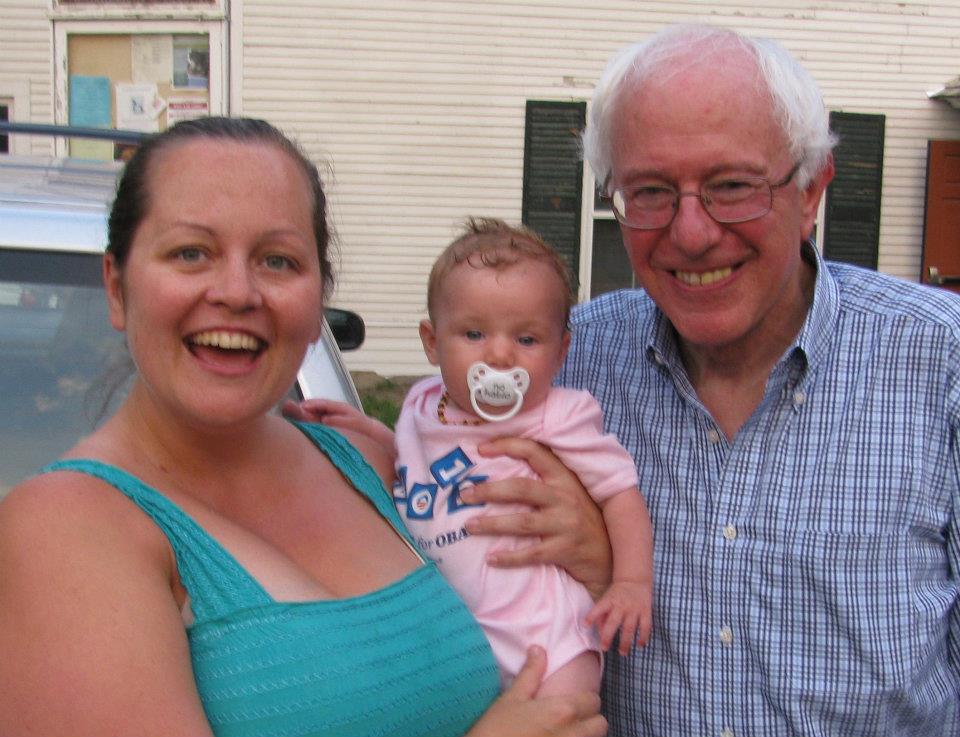
My daughter Jennifer and granddaughter Madeleine with Bernie Sanders in Maple Corner in 2012, just after his presentation and moments before the baby melted down.

My daughter Jennifer and granddaughter Madeleine with Bernie Sanders in Maple Corner in 2012, just after his presentation and moments before the baby melted down.

Afterwards, before leaving Maple Corner, Bernie  paused to share the love with my daughter and four-month-old granddaughter.  I’d say two out three of them were happy to have their picture taken together!  Anyway, I’m grateful for the photograph.

We all need to share the love.

Bernie may need the love more than the rest of us, because he’s the target of so many more slings and arrows.  But all of us who choose to be activists — for happiness, for justice, for the environment, for a new economy — need the sustenance of love.  Maybe that’s because, like all humans,  we all suffer, and we know that we will suffer more.  Further, those of us who are actively trying to make the world a better place also carry the knowledge that the earth and the people on it are suffering intensely.  “Each of us feels some aspect of the world’s suffering acutely,” writes Stephen Cope in The Great Work of Your Life, “And we must pay attention. We must act. This little corner of the world is ours to transform. This little corner of the world is ours to save.”

Even in our little corners, we can’t do it alone.  We need relationships.  We need community.  We need love.

Fortunately, love comes in  a wide variety of packages — from what Barbara Frederickson calls “micro-bursts” of love which can occur even between two strangers who are momentarily connected, to long term relationships with intimate partners and best friends.

Indeed, the day before I left for New York and the Climate March, I was on a conference call as part of the yearlong certificate in positive psychology I’m earning through Kripalu.  The conference call was focused on the importance of relationships to our personal happiness.  At the close, lead instructor Tal Ben-Shahar wished us all, “many micro-bursts of love.”

And in a way, that’s what the whole trip was — giving and receiving micro-bursts of love, as well as weaving deeper more loving relationships with the people who are near me in the river.  This was especially true for Ginger,  a friend from central Vermont who generously shared her New York City apartment with me and my  happiness colleagues Linda and Paula — who are now Ginger’s friends, too.  Ginger met me at Penn Station, thus soothing my fears of having to negotiate the streets of New York City on my own.  Paula arrived a little later, and Ginger fed us both a wonderful dinner.  We watched a very funny video Saturday morning before a full day playing in a sunny NYC — a free ride on the Staten Island Ferry, a free walk across the Brooklyn Bridge, and indescribably delicious street food at an Italian Street Festival.  Then we welcomed Linda for a lovely evening of pizza and wine.  Sunday, we had a hearty breakfast before heading uptown to march.

Ginger, me, Paula, and Linda getting ready to march!

Ginger, me, Paula, and Linda getting ready to march!

Thanks to a day of being good to each other, and celebrating, we arrived at the march fully supported (and supporting) in loving kindness.  Once there, we were all able to be our best.   When asked to help make and distribute signs, all four of us cheerfully and energetically jumped in and worked for at least an hour and a half.  The march started very late, but it didn’t matter — our spirits were high.  I felt at my best — able to be a happy, well-behaved member of a large crowd, take it in more fully, absorb it, and more ready to share and live the message of the march when I got home.

Okay, honestly, I wasn’t actually at my very, very best for the entire march.   Toward the end of the climate march, there was a small group of individuals holding anti-abortion signs. I thought, if you’re really pro-life, you should be in the march!! We’re talking about trying to save all human life — and most animals and plants, too — from extinction. How pro-life can you be?? But I wisely kept my mouth shut.

A few steps later, though, stood another “protestor” holding a sign, something to the effect of “Come to Jesus.” All I could think was, seriously? Don’t you think Jesus would be marching with us? Annnndddd … that came bursting out of my mouth. I hollered, “Jesus is over here.” Surprise, surprise, that was not well received. He yelled back at me “no over here” and I yelled something like, “no, over HERE!” It was not a particularly sophisticated or mature exchange.

But I was not in the river alone.  I could just feel my friends looking at me.  Imagining my behavior through my friends’ eyes helped me step back from my unhelpful behavior.  I took a deep breath, and returned my focus to the march.

Thank goodness for friends!  I guess we need them in the river with us sometimes to throw us life preservers.  That, too, is important.


Our new friend -- a young lady we met on subway, then saw in the March seven hours later.

Our new friend — a young lady we met on subway, then saw in the march seven hours later.  Thanks to Paula Francis for this photo.

Traveling to New York City for the People’s Climate March on September 21, 2014 was one of the best decisions I’ve ever made.  Yes, it made me happy.  Intensely, deeply, indescribably happy.  I was absolutely in the right place at the right time — not only for myself, but for all life on our precious planet.  I was flooded and overwhelmed with gratitude for everyone around me who made the effort to show up for this desperately needed wake-up call; pride that I was one of them; hope that maybe we can save the human race after all; and flat-out joy being in the presence of such a diverse, beautiful, celebratory crowd.

We are the ones we’ve been waiting for.

From a science of happiness standpoint, there’s no question why I would feel such a high — a transformative high, I believe — from this march.  Pick your happiness researcher and theory, and I can pretty much check it off the list. Mihaly Czikszentmihalyi and flow, or having a peak experience?  Ha! This was a lifetime peak experience!  Tal Ben-Shahar and his teachings on living in concordance with our values?  Yes, big time. Barbara Frederickson and the positivity ratio?  My ratio of positive to negative experiences that day was off the charts.   Chris Peterson and the theory of greater happiness by acting from our personal strengths?  My signature strength is the ability to give and receive love, and this day was all about the love.

Then there’s Martin Seligman’s P.E.R.M.A. which I used to predict my happiness at this event in another essay last month.  In reality, at the People’s Climate March, I was seeped in P.E.R.M.A.:

  • Positivity — oh, yes, everywhere, all weekend, even in the long long bathroom lines.
  • Engagement — fierce engagement, with the issues, with the future, with the city of New York, with the people all around me.
  • Relationships — yes, with the friends new and old with whom I was marching, and with all the other marchers, too — we were all connected.
  • Meaning — are you kidding me?  Fighting for the future of the planet?  It doesn’t get any more meaningful than that.
  • And accomplishment?  The organizers of this historic march hoped for 100,000 participants and four times that many showed up — 400,000 of us!  We did it!

All of this and more shaped that momentous day.  Now, back in my Vermont home, my heart and spirit are clinging to purpose, shared community, optimism, and mutual love for the planet and each other — a blend encapsulated by the most moving chant of the march, this piece of a prayer by a Hopi elder:

We are the ones we’ve been waiting for.

Oh my god, yes.  We are!  And, just to be clear, by “we,” I mean you, too — any and all of you who were at the march in body or spirit, or

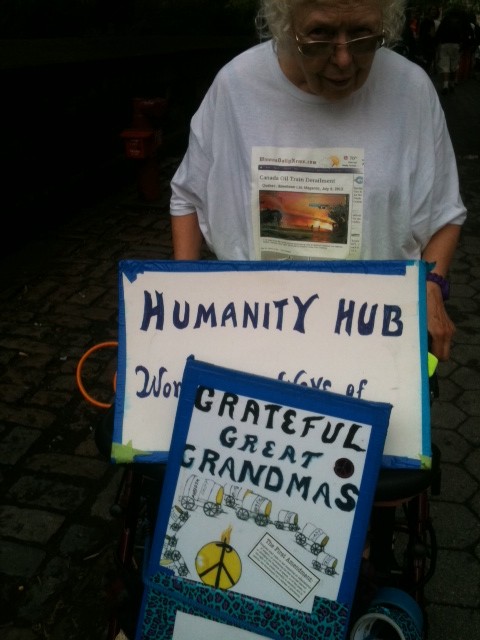
Even seniors who needed walkers showed up to march!

Even seniors who needed walkers showed up to march!

will be at the next one, or are doing your best to fight climate change on your home turf.  There is no one who can swoop in and magically fix this disastrous situation — literally disastrous, and likely to grow worse.  As one sign put it, “To Change Everything, We Need Everyone.”

Sunday, it felt like everyone did indeed show up.  For so long, I’ve been wondering when Americans were going to rise up, take to the streets, and demand environmental and economic justice.  Finally, finally, we the people were out in glorious, loud, forceful numbers.  Yes, there were some justifiably famous climate warriors near the front of the march  — like Bill McKibben, Vandana Shiva, and our own beloved Senator Bernie Sanders.  They weren’t at the very front, though, because that spot was reserved for the indigenous peoples and others in the United States and around the world who are already suffering from climate change.  I felt humbled to be marching behind these front line warriors.  We need them, and they need us.

We are the ones we’ve been waiting for.

The chant sent me back to re-read the Hopi prayer:

You have been telling the people that this is the Eleventh Hour. Now you must go back and tell the people that this is the Hour. And there are things to be considered. Where are you living? What are you doing?
What are your relationships?
Are you in right relation?
Where is your water?
Know your garden.
It is time to speak your Truth.
Create your community.
Be good to each other.
And do not look outside yourself for the leader.
This could be a good time!
There is a river flowing now very fast.
It is so great and swift that there are those who will be afraid.
They will try to hold on to the shore.
They will feel they are torn apart and will suffer greatly.
Know the river has its destination.
The elders say we must let go of the shore, push off into the middle of the river, keep our eyes open, and our heads above water.
And I say, see who is in there with you and celebrate.
At this time in history, we are to take nothing personally, least of all ourselves.
For the moment that we do, our spiritual growth and journey comes to a halt.
The time for the lone wolf is over.
Gather yourselves!
Banish the word struggle from you attitude and your vocabulary.
All that we do now must be done in a sacred manner and in celebration.
We are the ones we’ve been waiting for.

Sacred!  That’s a piece I was missing — the march was sacred, and celebratory.  We were all good to each other.  We were all the leader.

We are the ones we’ve been waiting for.

Perhaps coincidentally — perhaps not — just a few days after the march, it was announced that Bill  McKibben will be one of the recipients of this year’s international “Right Livelihood” award in Stockholm this December.  On a much smaller coincidental scale — or maybe we’re just all swimming in the same river — I used the Hopi prayer to open and close my first guest service at the Montpelier Unitarian Church.  The thrust of that sermon was the need to cultivate personal happiness in order to better prevent and cope with climate change.  Is this prayer speaking to many of us now?  Is it part of your life?

Me, Marta Ceroni, Linda Wheatley, and Paula Francis offering a new sustainable paradigm for people and the planet.

Me, Marta Ceroni, Linda Wheatley, and Paula Francis offering a new sustainable paradigm for people and the planet.  Thanks to Marta Ceroni for this photo.

Something else that became clear to me on the march — or maybe during my conversations with Linda Wheatley on the train ride home — is that a gross national happiness paradigm is the road map we’ve been waiting for.  Both before and during the march, many people expressed their very strong beliefs that capitalism must be destroyed in order for the planet to be saved.  I share their view that the current corrupt capitalist system is driving many destructive practices, environmental and otherwise.  Further, we can obviously no longer afford a growth economy — a GDP driven economy is driving us over the climate change cliff, and causing massive unhappiness.  Without a doubt,  we need huge systemic changes.

However, “down with capitalism” is not sufficient.  If capitalism is destroyed, what will replace it?  As Marta’s sign says, we need to move beyond GDP, to an economic system based on the well being of people and the planet — a system that could include elements of capitalism and all the other ism’s if and when those elements demonstrably support well being.  To get there, we need a strong gross national happiness movement.  Very personally, in this subset of the larger movement for climate justice, we are the ones we’ve been waiting for.  And we have a lot of work to do!

In his book “The Great Disruption: Why Climate Change Will Bring On An End to Shopping and the Birth of a New World”, Paul Gilding writes that the end of a growth economy will not come without dreadful suffering and loss — loss of millions of lives, of entire species, of countries which will end up underwater — as we pay the price for “a world economy based on consumption and waste, where we lived beyond the means of our planet’s ecosystems and resources.”

Though his prediction is grim, Gilding is simultaneously quite optimistic.  He believes that we humans will rise to the challenge with “compassion, innovation, resilience, and adaptability.” On the other side of the Great Disruption, he says, “we will measure ‘growth’ in a new way. It will mean not quantity of stuff but quality and happiness of life.”

In other words, a GNH paradigm.

I initially read Gilding’s book sitting in the warm Alabama sun while visiting my very pregnant daughter.  About to give birth to a brand new person, she didn’t enjoy hearing about the “millions of people dying” prediction.  I, however, was much more struck by Gilding’s emphasis on economies of happiness.  Really, I was stunned when I read that millions and millions of people around the planet are already working on developing economies of happiness.

It was an amazing moment for me, realizing that I was one of those millions, that I am not at all alone, that I am part of an immeasurably large, organic, worldwide movement.  For all of us — including each of you — the Hopi elder’s words ring prophetic:

“It is time to speak your Truth.
Create your community.
Be good to each other.
And do not look outside yourself for the leader.
This could be a good time!”

We ARE the ones we’ve been waiting for!


TSA PRE status?  Did someone tell the airline I was writing about them?

TSA PRE status? Did someone tell the airline I was writing about them?

Here’s the caveat: After my recent blog about focusing on the positive aspects of being a passenger on a commercial airliner, a blog which came on the heels of my musings about why attending the People’s Climate March in New York City will make me happy, my friend George found the juxtaposition odd.  He asked me how could I write about my passion for protecting the environment and then just a few days later write about the joys of airline travel, given that flying is about the worst thing we can do in terms of our carbon footprint?

Good question, George.  Here are my answers:

  1. First, I am not a purist. I have made many, many changes in my life — using a clothesline, buying local, eating less meat, etc.  But we are all products of the systems we live in.  That is one reason I support a Gross National Happiness paradigm and the People’s Cllimate March — because we need new systems.  Those planes would all have taken off without me on them. The problem is too big for any of us to fix by our individual actions.
  2. Second, I do take such issues into consideration.  Two out of three of my trips to visit my daughter and granddaughter since they moved half a country away have been by train, rather than plane, for both economic and environmental reasons (the third was by car, and there were three of us in that car, so that seemed a fair choice). Truthfully, I’ve flown very rarely.  My recent trip was only the 15th time I’ve flown.  Ever.  And I’m not that young.
  3. Third, I went to North Carolina for important relational reasons.  Relationships are tremendously important, not only in terms of personal happiness but also to exchange ideas and help us all move forward.  I shared tales from the Gross National Happiness movement, and learned much in return. One friend, for example, showed me a new pond she had dug next to her off-the-grid cabin.  The pond is stocked with fish, to provide a sustainable source of protein for her family.  For me, that’s food for thought.
  4. My point with the previous flying blog was not to encourage flying, but rather to encourage a positive outlook toward an incredible option in our lives that most people treat with grousing rather than gratitude.  Really, the environmental concerns about flying only add to the need for a positive attitude when one does choose to fly.  Choosing to have such a negative impact, and then complaining about it, seems particularly self-indulgent.  If you’re flying, the least you can do is appreciate it!

All in all, I’m grateful to George for raising this important point.  Our individual choices can add up.  I think the preponderance of organic choices in almost all grocery stores is testimony to that.

Now, when I do fly, I feel even more duty bound to focus on the positive. 


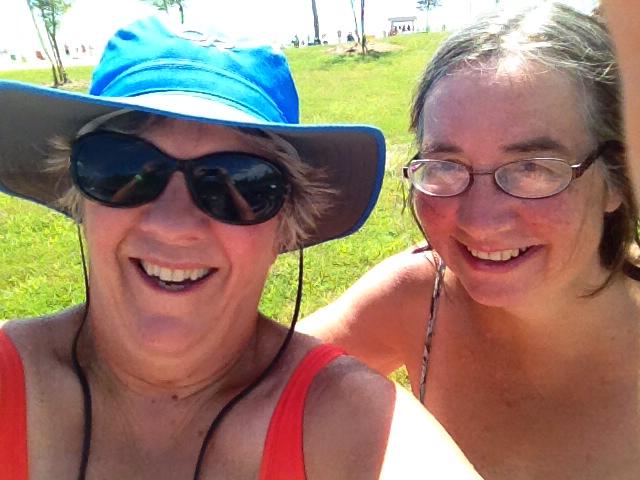
Swimming at a state park with my North Carolina friend Lynn!

Swimming at a state park with my North Carolina friend Lynn!

Counting The Flying Positives, Part Two

The positive framing of my flight to North Carolina was so powerful, I felt like I had changed my brain.  I mean that quite literally. Thanks to neuro-plasticity, I probably  did, at least a little. One of the mot impressive aspects of the education I’m receiving from Tal Ben-Shahar and the Certificate in Positive Psychology program at Kripalu is learning how seemingly small interventions can have a long-lasting, powerful impact.

So it’s a strong possibility that I wore a new groove in my brain — the “flying is fun” neuro-pathway. Creating positive neuro-pathways is excellent for both our short term and long term well being.   Plus, focusing on the positive absolutely made my flight to North Carolina a much more enjoyable experience.  For those reasons, and because I wasn’t about to purposely focus on the negative,  I decided to repeat my experiment to focus on the positives during the journey north.

It was definitely tougher going on the way home.  I was, after all, returning from vacation, which for me was a bit of negative double whammy.  First, that meant it was time for some of the fun and games to end.  Even more impactful, I was wrapping up a week of way more sugar, caffeine, and wine than usual, and, sometimes less sleep than I need.  Thus I arrived at the airport tired, a little sad, headachy, slightly sick to my stomach, and dehydrated.

Plus, it was not my happy little Burlington airport but rather the very busy (ie, stressful) hub airport in Charlotte.  And I kept feeling that my time in the Smokey Mountains with my friend Jeannette — who I stayed with for the second part of my trip — just wasn’t long enough.

Aaaannnndd … I was headed home to my dear husband Bob and the Vermont I love so much — two giant positives.  Maybe the ledger was even.

So, time to start counting the positives for that journey.

  1. Jeannette drove me three hours to the airport — a six hour round trip for her!  That is friendship.  Yeah, that is a friendship that started when we were only 11 years old.  Sweet.
  2. Not only that, on the drive there Jeannette shared with me invaluable insight and information about the publishing process — exceptionally positive for me because (you heard it here first) I am about to embark on the writing-a-book path.
  3. When Jeannette dropped me off at the curb (we were running late, no time for her to park), I felt like I won the air traveler’s lottery!  I dashed up to the curbside check-in with no line at all where a very friendly airline employee took my bag and gave me a ticket smoothly and quickly.  He then pointed to my boarding pass, and the letters “TSA-PRE.”  He said, “When you get to security, go the TSA-PRE line.”  I thanked him, and rounded the corner where there were long lines for all the security checkpoints — except TSA-PRE where the line was non-existent! I went up to the lone employee there and showed him my boarding pass.  I said, “I don’t know why I was given this, I’m just an ordinary passenger.”  He smiled, checked my ID, and sent me right to the X-Ray area where I started to take my laptop out of its case.  I was told, no, no, you don’t need to do that.  And, I didn’t even have to take off my shoes!  I whisked through security in less than five minutes.  Amazing, just amazing.
  4. Later, on the plane, I read about the TSA-PRE program.  There was a bulleted list of categories of eligible passengers.  I was not in any of the categories!  (Did someone tell the airlines I was writing about my experience???)  (I must say, BTW, that the airline in question was United — though I think the positivity exercise would probably work equally well with any airline.)
  5. I had a mini (mini, mini) happy “reunion” when my seatmate turned out to be the woman who had moved her bags out of my way to give me a seat in the gate waiting area.
  6. Lift off — thanks to my meditative mode — was an almost blissful sensation, one of gliding to the heavens.
  7. Outside the window, I saw a cloud formation that bore a striking resemblance to a cement lion, the kind that might guard a driveway, bridge, or la-di-dah front entrance.
  8. It was once again quiet enough for me to meditate.  I was still feeling a little crappy, so it was harder to lean into that experience, but it was still okay — it’s good to try!
  9. I didn’t spill anything on my seatmate.
  10. I had consolidated my packing to make it quite unlikely that I’d lose my laptop again.  Hey, I learned something from my previous travels — woo hoo!
  11. Making my connecting flight was very stressful  — barely enough time to get from my arriving gate to my departing gate, plus lots of unhappy looking people, and other sights I didn’t enjoy (like, rampant destructive consumerism). BUT I was determined to look at the positive, and I found it, especially in relationships.  Adult children taking care of elder parents in wheelchairs, laughing children, people holding hands.  There was a lot of love on display.
  12. I made my flight to Burlington!
  13. My seatmate was active duty military, a very conservative and exhausted fellow returning home from a long overseas flight.  It soon became clear that our views on many topics were miles apart.  Yet, we had a civilized and respectful conversation and, quite wonderfully, found ourselves in fundamental agreement on the concept of Gross National Happiness.  Coming from opposite sides of the political divide, we agreed that measuring societal success solely based on money and materialism is unhelpful at best and destructive at worst.  Further, he shared that his personal happiness is all about time spent with his wife and young children — family and relationships, just like the rest of us. We would never have had this very positive conversation without the airline throwing us together as seatmates.
  14. Finally — you may have guessed — my husband was waiting for me.  We went out to dinner at a great farm-to-table organic localvore taco restaurant, and drove home through the lush late summer Vermont scenery.

Aaaahhh … there’s no place like home!

Home — which I am leaving again tomorrow morning, by train, to go to the People’s Climate March.  There is no way I can count the positives for this trip — they will be uncountable, I am sure.  I am no longer nervous about going, as I am traveling with friends, and staying with another dear friend.  No matter the trip, relationships are awesome.

More on the Climate March later!


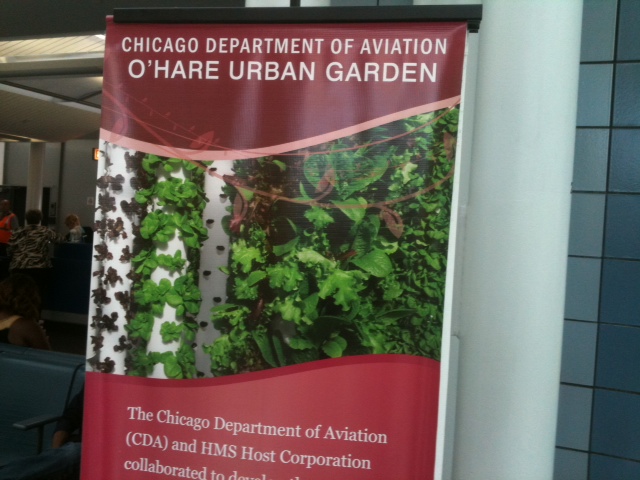
A hopeful sign of moving in the right direction: O'Hare airport's vegetable garden!

A hopeful sign of moving in the right direction: O’Hare airport’s vegetable garden!

Last Saturday morning, I had an early flight to western North Carolina to celebrate a friend’s 70th birthday.   I’ve been trying to say “yes” to life’s opportunities more often, so when the invitation came from my friend Lynn, I figured out a way to afford the airfare.  I also love that part of North Carolina.  These friends live about an hour east of Asheville, where the mountains are spectacular.  Plus, I have another dear friend — a high school era BFF — an hour west of Asheville.  This was a chance to spend time with her, too.  It was all very last minute, but I said, “yes!”  Yes, to a pleasant, meaningful, happy trip.

Then in the car, I started complaining to my husband as he drove me to the airport.  I said, I’d be much more excited if I was driving*, not flying — because, of course, everyone “knows” flying is just no fun anymore.  It wasn’t major complaining, but I was definitely leaning into my brain’s negativity bias (which, by the way, your brain has, too!).

Yet,  about an hour later, when I heard the pilot speak in a delightful Irish brogue, I realized, “I’m having fun! I’m enjoying my air travel experience!”

That realization made me think about the power of intention, and attention.  In any given moment, we  choose (usually sub-consciously) what we pay attention to — and what we don’t pay attention to, don’t even see.  It is simply impossible to pay attention to everything all the time.   We can consciously choose to focus on the positive, or we can choose the negative.   If you doubt the power of attention, try this quick video test.  I’ve seen other versions, but I think this gets the message across.

In turn, that led me to mull over  one of the fads currently making the rounds on Facebook.  I’ve been repeatedly challenged to “name three positive things” each day for a week.  I’m not at all opposed to the “three positive things ritual,” but buckled in my seat and waiting for take-off,  I thought, “Why just three?  What if I count all day?  How many positives will I rack up?”

It was immediately apparent that counting all the positives is impossible.  I mean, the sun rises and my heart beats and I have running water.  Not to mention, I was about to be, as comedian Louis C.K. puts it, “partaking in the miracle of flight.” I also wake up almost every day in Vermont, a place that is so special to me and where I am always grateful to live.  The scenery between my house and the airport is stunningly beautiful.  On a more personal note, I wake up most days next to a loving and devoted husband, to whom I am also enormously grateful.  Etc.  Life overflows with positives.  With all that as a baseline, here are just a few positives from August 30, 2014:

  1. Yay for a 7:30 AM flight! Many flights leave Burlington at 6:00 AM.  It is ever so much more civilized to leave the house at 5:30 AM than to leave at 4:00 AM.
  2. For some reason, I was totally prepared and ready to roll out of bed and into the car.  Patting myself on the back!
  3. Bob offered to accompany me into the airport, not just drop me off outside.  So sweet.  So Bob.
  4. The check-in was totally smooth and pleasant.  I didn’t even have to use one of those automatic machines which make me anxious.  Instead, I got to deal with a pleasant and helpful human being.
  5. Yay for Skinny Pancake!  It makes me happy to have this Vermont franchise, with its emphasis on local and organic products, in the airport gate area.  Plus, I could buy bottled water from them in a resusable glass battle!  Awesome.eat-more-kale-sticker
  6. Coffee!! ‘nuf said.
  7. Pleasant interaction with a woman and her young adult son waiting to board.  They were flying to Colorado for the start of  his college career.  Fun to wish them both well.
  8. Pleased to have a seatmate who doesn’t want to talk (though, I would probably also be pleased to have a seatmate who does want to talk!)
  9. Phew!!  Especially pleased that this seatmate (a young man) seems to have a pleasant disposition.  That is, he didn’t get upset when I spilled water all over him.
  10. Good thing it wasn’t coffee.
  11. Flying over my beloved Vermont and seeing some special spots from the air (like Shelburne Pond).
  12. Glad I chose only yogurt at the Skinny Pancake and not a muffin.  I always seem to gain weight while traveling.  At least I’m off to a good start.
  13. Happy also to fly over the Adirondacks, a magnificent wilderness area I can often see from the Vermont side of Lake Champlain.  Though I would love to spend some time on the ground in the Adirondacks, we never do, because Vermont’s mountains  constantly beckon.  So it’s nice to get a good view of the Adirondacks this morning.
  14. It is a beautiful summer day.
  15. I laughed out loud (but not too loud) when the flight attendant announced, “For the comfort of other passengers, please securely close the door behind you when you use the lavatory.”
  16. I was inspired to write!  I so love it when I am visited by inspiration.
  17. An article in the in-flight magazine about Dutch aeronautical student Boyan Slat, who has developed a method of cleaning up the massive floating plastic garbage dump in the Pacific Ocean, fills me with hope.
  18. Traveling with a bathroom.  Really, that’s soooo much better than mile after increasingly stressful mile in the car, wondering where I can possibly stop to use the restroom.
  19. Feeling like such a goofus on the plane — bumped my head, scrawled some ink on the back of the seat in front of me, and of course spilled water on my seatmate — but (and here’s the positive) — feeling so okay with this.  Sometimes I get to be in a group where I am the wise one or sparkle in some other way.  Sometimes, I’m the goofus.  It is really okay.
  20. Plenty of peacefulness on the plane, making it easy to meditate.
  21. Appreciating the fact that meditation has become a joy and not a chore, and that I no longer worry about whether I’m doing it “right.”  I know it’s right by how I feel, even squished into a tiny seat on a crowded plane.
  22. More signs of hope.  They are everywhere, it seems.  Solar panels, windmills, and, in Chicago’s O’Hare airport, of all places, a poster about the airport’s own vegetable garden.  Awareness seems to be growing re sustainability changes we all need to make.
  23. I love Vermont but it is exceptionally homogenous.  It is fun for me to see such a diverse population as the passengers in O’Hare.
  24. Talking with my granddaughter on the phone — really, talking with my daughter, because my granddaughter was too happy playing in the background for a phone call right now.  I think that’s great.  I’m happy she’s happy.
  25. Fun exchange with the flight attendant about the fact that non-dairy creamer is a poor substitute for half-n-half.
  26. I did NOT lose my laptop in the Charlotte airport!  I put it down near the baggage claim area, to call my friend Lynn and let her know my status.  After I grabbed my suitcase from the carousel and started walking away, I realized I no longer had my laptop with me!  Mild panic set in, but I went back to where I made the phone call, and there was my laptop.  So, so relieved.  That would have put a real damper on this positivity list!  Instead, it’s one of the highlights.
  27. Yay for “Eat More Kale” stickers!  Montpelier artist Bo Muller-Moore hands out free, mildly subversive  “Eat More Kale” stickers.  I had stuck one on the plain black suitcase I borrowed from Bob, so this suitcase would stand out from all the others just like it on the baggage claim carousel.  It worked!  I spotted the bag right away.
  28. When Lynn picked me up, I really enjoyed looking at her simple but effective turquoise drop earrings and her matching turquoise blouse.  Very pretty.
  29. With an hour drive to her house, Lynn and I had time to reconnect in the car after four years of not seeing each other.
  30. Then when we arrived at their house, I could reconnect with Mark, the birthday boy — once also known as my college adviser.  Very special.
  31. Later, all three of us sat out on the deck drinking wine and eating crackers and cheese.  Delightful.
  32. Lynn made a simple but scrumptious stir fry dinner, with chicken, bok choy, and rice.  Perfect.
  33. The guest bed is super super comfortable!!
  34. With the windows wide open, I can hear the crickets chirping as I fall asleep.


All in all, a good day made so much better by focusing on the positives — so much better, in fact, that I feel like my brain has been at least a little bit re-wired.  I honestly look forward to my flight back home to see what joy it brings me.

This was such an easy exercise.  Let me know if you try it — I’d love to see your list!


* Of course, driving would have been a terribly selfish choice, environmentally.  I know some folks I know refuse to fly on environmental grounds, but nurturing relationships with lifelong friends seemed like a good enough reason to fly in this case.


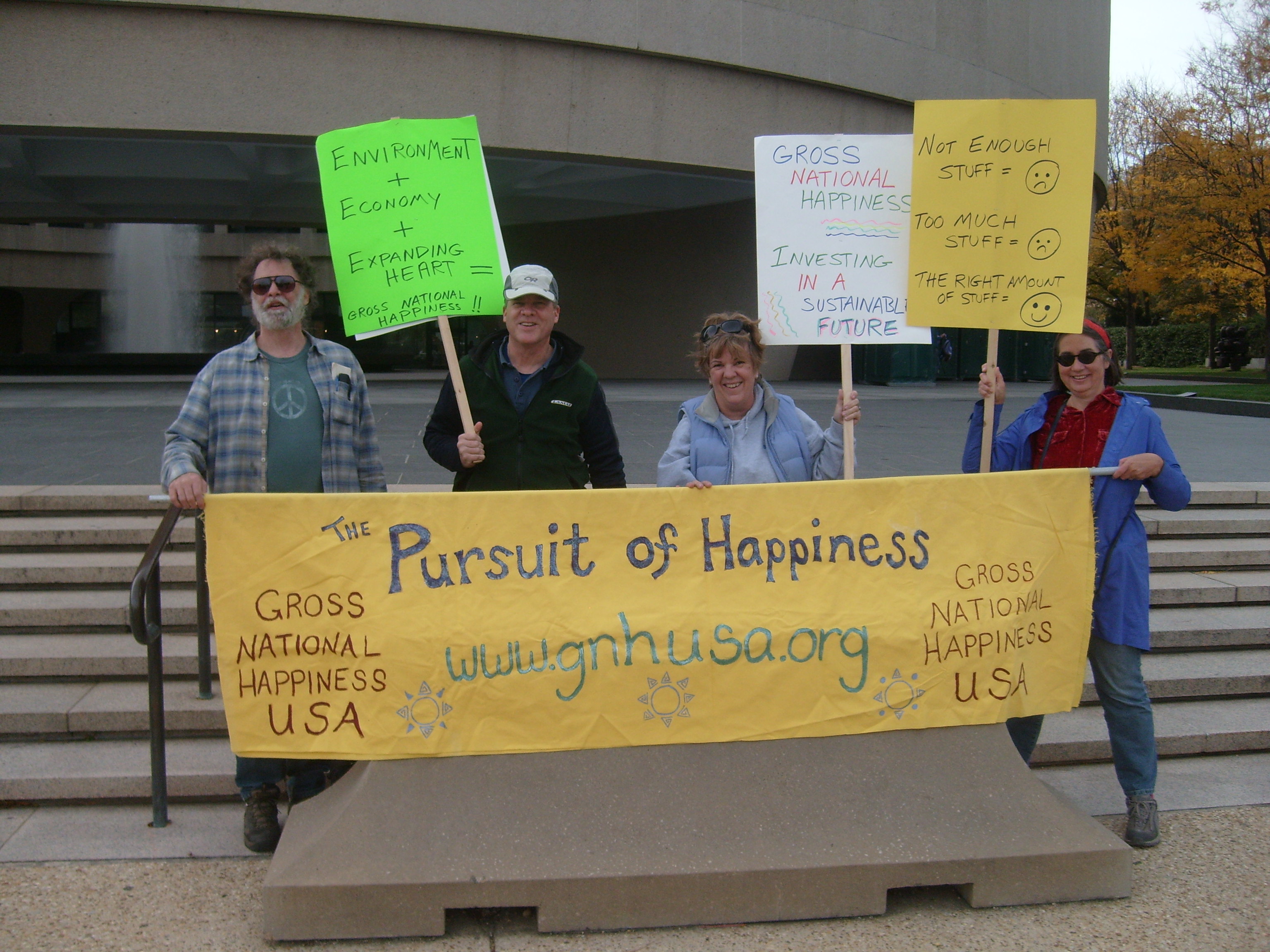
Taking the Gross National Happiness Conference to the Jon Stewart-Stephen Colbert Rally in 2010

Taking the Gross National Happiness message to the Jon Stewart-Stephen Colbert Rally in 2010

I am no stranger to the protest march.  I’ve been hitting the streets in support of, or opposed to, various causes and issues since high school.  In fact, it was during one of those high school era marches — the 1969 Moratorium on the Vietnam War — that my husband (far left in the above picture) and I fell in love.  Raising our voices in this manner has been a consistent thread throughout our 40+ years together.  Of course, not all the protests were as much fun as the Jon Stewart-Stephen Colbert gathering in 2010, which was truly joyous as well as hopeful (that’s me on the far right above). Still, I usually feel exhilarated by participation.  I did something.  Maybe not enough, maybe just a drop in the ocean — but I believe in drops. Eventually,they can become tidal waves.  I’m a believer in Martin Luther King Jr.’s compelling observation: “The arc of the moral universe is long, but it bends toward justice.”

Marching is an act filled with happiness-inducing components: optimism, community, a sense of meaning (working for a purpose greater than oneself), being fully present and in the flow, and at the end, the reward of accomplishment.  It’s not that the struggle is over — the arc on all these issues is long! — but there is a satisfaction in knowing that, at least for this moment, I was part of a job well done.  In his most recent book, Flourish, Martin Seligman put forth a new theory on happiness — P.E.R.M.A., standing for Positivity, Engagement, Relationships, Meaning, and Accomplishment.  All of those elements will be present when I join the (hopefully) millions and millions of people coming to New York City on September 21st for the People’s Climate March, part of the Global Weekend of Action for Climate Justice.

So I should be happy about my planned participation, right?

But I’m not.  Okay, as I write this, I’m starting to get excited!  My, my, my, the power of our brains to choose whether to be positive or negative is so awesome.  But when I sat down at my laptop, I wasn’t happy about this upcoming trip — I just knew I would ultimately be happy with my decision to go.

Harvard Professor Daniel Gilbert, author of Stumbling on Happiness (the first happiness book I ever read, back in 2007), writes that we are particularly bad at predicting our own happiness.  He is an engaging speaker, and gives a very entertaining TED talk on this topic.

I’ve watched that TED talk several times, in addition to reading the book, so perhaps some of his wisdom has been sinking in.  For weeks, I’ve recognized a strong “I don’t want to go” sensation every time I think about the People’s Climate March.  Part of it is inertia.  Part of it is our intensely, amazing, gorgeous Vermont Septembers — definitely the best time of year to be here.  It is also a time when tasks loom large.  Winter is starting to breathe down our necks.  It is time to put gardens to bed, to stack firewood, to get in those last few swims and kayak rides before the water gets too cold.  Part of it is money: I just don’t feel like I have the extra dollars lying around to pay for a trip to New York.  And a large part — very large! — is fear.  I don’t mean fear of violence — I expect that day to be peaceful and loving.

No, I’m afraid I’ve become a country mouse.  Even though I lived for several decades in Washington, D.C. (a puny town compared with New York), I have become quite used to the ways of Vermont.  The population of the whole state is just slightly more than the population of D.C.  Montpelier, my closest city, is also the smallest capital in the nation, with a population numbering fewer than 8,000.  I am happy to travel from quiet place to quiet place (say, my sister-in-law’s house in coastal Maine) but the idea of having to navigate New York City like a grown up is totally overwhelming.

But, and here’s where Daniel Gilbert’s work comes in handy, I know if I don’t go I will really wish I had.  There is nothing, nothing, more important than standing up to world leaders and demanding major, huge, significant action to ameliorate climate change right now!  All our work on personal happiness and systemic happiness will do no good at all if the climate deteriorates to the point where human life is no longer possible.  On September 21st, what on earth could be more important for me to be doing than adding my voice to millions more, rising up to call out for climate justice?  Another ride in my kayak?  Mulching a blueberry bush?

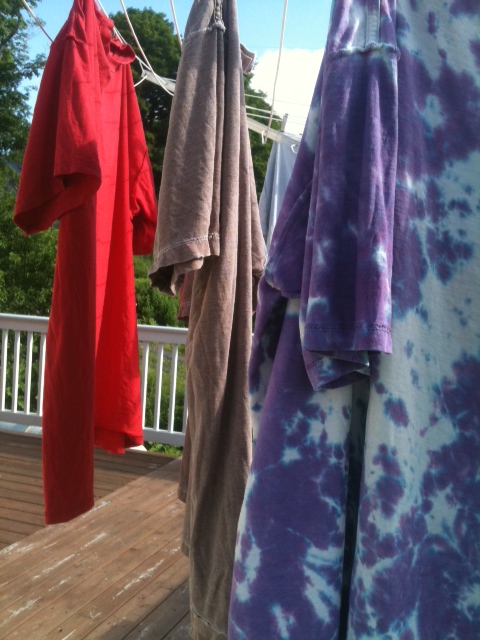
Obviously, taking the steps to feel personally happier are not always the same as the path of pleasure — especially under my happiness paradigm, which encompasses not only my personal joy but also the well-being of people, animals,  and the planet.  To truly be happier, we need to act in accordance with our values and beliefs — do the right thing even when it is uncomfortable.  My values say, I must do everything I possibly can to stop climate change — but there’s just so much I can do.  By myself, I can’t get the oil companies to stop drilling for Tar Sands.  I can’t afford a hybrid car.  I contribute to the problem in many ways, and I need governments and big industry to establish the big systems that make future life possible.  I hang my clothes up to dry, I buy local, I do what I can individually.  At this point in time, individual action is no where near enough.  There must be, must be massive collective action.  Including me.  And you, by the way.

So I will be there, and I will be damned glad I am.

And guess what?  I will also have fun.  I will hitch a ride with friends (in their hybrid car), I will spend the night with other friends.  I will enjoy their company.  I will enjoy the massive stimulation of New York City.  Good food is a strong possibility. I will feel elated with hope.  I will be part of a global community with a much greater reach than central Vermont.  I will probably sing, and maybe even dance.  I will feel an incredible sense of meaning, and at the end of the day, a rewarding sense of accomplishment.  It will be a happy weekend.

I will not “stumble” on this happiness.  No, I will face my fear, and act from love — love for the planet, love for future generations, love for us all.

I hope to see you there.  You can give me a hug to let me know everything’s all right.


(Warning: the post below does not necessarily show off the author’s finest qualities.  Even worse, I’m hoping you’ll see yourself in these behaviors, because awareness of the unhappiness caused by constantly comparing ourselves with others is the first step toward freeing ourselves from social comparison’s grip on our psyches [and wallets].  Furthermore, since social comparison is a root cause of much environmental devastation, loosening its grip is good medicine individually AND collectively.  But never fear.  If you make it to the close of this little essay, you’ll find some ideas for breaking free or at least harnessing social comparison for the better. )

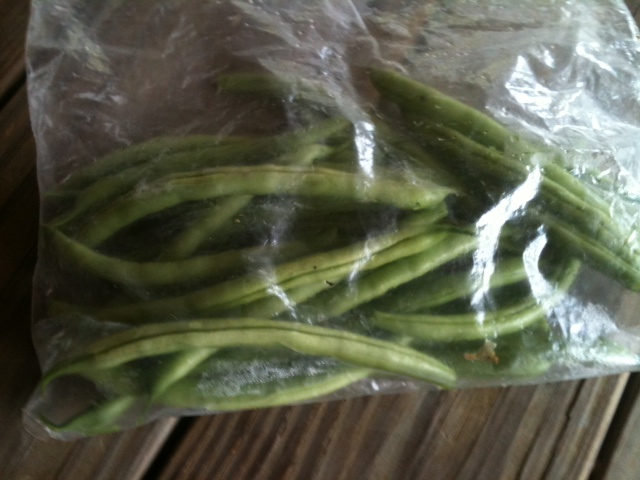
Mary Jane's extra beans.

Mary Jane’s extra beans.

Last Sunday evening, my friend Mary Jane brought a bag of extra green beans from her garden to share with other attendees at our weekly meditation gathering.  I gratefully accepted half the bag (there was one other taker) as Mary Jane enthused about how well her vegetables are growing this summer.

My garden is NOT doing well.  We’ve never bothered with a fence, but after this year — as all the peas and various other vegetables get eaten by unknown wild animals — we’re starting to think that might be a good investment.  Even my blueberries, which thrived last year, had a lackluster summer.  Could it be because I was a lackluster weeder?

In fact, the blueberries are my only crop.  Unlike almost all my women friends here in Vermont, I am a sorry excuse for a gardener.  Comparing myself to them … I just have to keep my mouth shut and not let anyone know I’m really not in their league.   I hardly ever even come to the ballpark.  It’s embarrassing.

My husband Bob is the real gardener of the family.  Speaking of my husband, he and I have both been trying to lose weight.  It’s discouraging to compare my progress with his, as he is doing significantly better than I am.  I am losing weight, but at our weekly check-ins, I am only down a few ounces,  while he can gleefully exclaim that he’s at a record low for the past five years.

Of course, I can take comfort in knowing I’m still doing better than our friends, another couple, who are part of this challenge with us.

Ugh.  What am I doing with all this social comparison?  Making myself unhappy, of course.  Why can’t I enjoy my husband’s success without also berating myself for my less diligent path?  And why can’t I just admire Mary Jane’s gardening bounty, accept her offer graciously, and not feel “less than” because I’m not a good gardener? And how pitiful to try and elevate my own self-esteem by noting that I am doing better than my friends — they’re my friends, for heaven’s sake.

Garlic social comparison

Not only that, but some of Bob’s gardening is yielding wonderful results.  He is harvesting another year’s worth of garlic, and the potatoes are doing better than ever.  His garlic bulbs are so big and succulent … I found myself looking at yet another friend’s just-harvested garlic and thinking, “your bulbs aren’t as big as Bob’s!”

What???  Petty, ridiculous, mean-spirited.  Okay, I’m not perfect — or as my friend Diana used to put it, “your halo’s slipping a bit” — but I don’t like this in me.  It is downright unpleasant.

Sadly, I could trot out an endless array of this kind of whiny, self-centered comparison — especially after I’ve left the comfort zone of central Vermont and spent time in an urban environment.  Then the flood gates of social comparison burst open, up and down, left and right.  I’m worse than because I’m wearing my sloppy Vermont clothes with my unkempt, non-trendy hair.  No, wait — I’m better than because I’m wearing my sloppy Vermont clothes with my unkempt, non-trendy hair.  It’s a lose-lose mindset.

As Sonja Lyubomirsky notes in The How of Happiness,” social comparison can be a pernicious destroyer of our happiness.  “You can’t be envious and happy at the same time,” she observes.  Nor can one be happy while disrespecting others.  While social comparison is inevitable and can serve a positive purpose — we can be inspired by others to do better ourselves — it is definitely a big problem for me.  I see it as the weakest link in my personal happiness chain.

Not only that, I believe social comparison is also at the core of many problems facing the planet as a whole.  Lord knows, advertisers play up social comparison to the hilt to get us to buy more stuff, which can have devastating impacts on our lives, the quality of lives of workers in far off countries, and the environment. I’ve shared this link before, and I’m sure I’ll share it again, but if you want a quick primer on how our hunger to “keep up with the Jones'” affects the world around us, check out Annie Leonard’s “The Story of Stuff.”

Even without looking at the bigger picture, social comparison can fuel endless wanting.  From the Buddhist perspective, that’s synonymous with endless suffering.

Naturally, Bruce Springsteen captured the tug of social comparison in one of his songs.  In “Badlands,” he sings, “Poor man wanna be rich, rich man wanna be king, and a king ain’t satisfied till he rules everything.”  There you go — social comparison all the way around.   I used to compare my poor husband’s arms with the super-buff Bruce, but even while doing so, I knew it was totally unfair to compare my real life regular guy with a mega-celebrity.  Yet, how many people get caught in the trap of comparing ourselves with celebrities — favorably or unfavorably?  I suspect it’s a major cause of unhappiness.

Even in the virtual world, social comparison can be a real downer: last year, a University of Michigan study found that Facebook makes users sadder.  According to an NPR report, research co-author John Jonides, a cognitive neuroscientist, noted:  “When you’re on a site like Facebook, you get lots of posts about what people are doing. That sets up social comparison — you maybe feel your life is not as full and rich as those people you see on Facebook.”

Happily — really, literally, happily — we can loosen the grip of social comparison.  A few suggestions follow.

First of all, turn it around — I/we can look at ways that we’d like to improve and see if there are others who inspire us.  For example, I wonder about all the ways I can help stave off (or at least ameliorate) climate change.  I know we need big systemic change to do this effectively — and, at the same time, I know that there are many, many small steps each of us can take.  To find out what others are doing,  two days ago I started a new Facebook group called, “Saving the Planet One Small Step at a Time.”  Already, I can compare myself to those who are using very fundamental cleaning supplies (plain baking soda and apple cider vinegar instead of store bought shampoo) and with a friend of friend whose blog, “The Non-Consumer Advocate,” focuses on ways we can all end our soul and planet destroying wasteful consuming ways.

I want to compare myself with these folks — they help me aspire to do better.

Even here, though, the comparison needs to be thoughtful.  Recently, when a post showed up on Facebook about a recent study showing that Vermonters spend less time grooming themselves than residents of any other state, I was quite pleased at this distinction.  So were many of my Vermont friends.  One could argue that this shows a heightened connection with nature and an awareness of the chemicals in cosmetics, etc.   Or … could it just be unhealthy Vermont exceptionalism?  I’m not sure.

Sometimes, I strive to be the one others look up to.  When I’m teaching meditation classes, I try to lead by example (ie, meditating every day).  When I mediate, I work at being the calm eye in the midst of a raging conflict storm.  Like most mediators, I try to model productive conflict strategies.

Here, too, it is important to be self-aware.  We are all on journeys.  I myself have a lot to learn about meditation.  And I also can get caught up in personally challenging conflicts.  Even while modeling, I need to remain humble, which is not easy.

Second, we can reframe how we view our own situations.  For example, I have a lot of social comparison issues with my house.  All too often I look at others’ homes and think, I wish I had your house, not mine.  Yet my house has many wonderful aspects.  As a former barn, it is unique, special, interesting, artsy, roomy, and comfortable.  My house is situated in the heart of a thriving, supportive community and across the street from a beautiful Vermont lake.  It is not perfect.  Neither am I.  Lately, when I catch myself obsessing about my house’s shortcomings, I try to reframe my thinking to focus on all its plusses instead.

Third, if you catch yourself thinking that your house — or whatever else — is better than, that is a fine time to practice gratitude.  Feeling grateful for is much more positive than feeling superior to.

Fourth, I’ll turn back to Annie Leonard and her more recent offering, “The Story of Solutions.”  On a personal level, on a systems level, can we turn away from “more” and focus on “better” instead?  Better choices, that is — not “better than.”  This simple formula for re-defining our goals is particularly powerful in curbing materialistic social comparison cravings.

Fifth, try making your own “Positivity Portfolio.”  I learned about this technique in the Certificate in Positive Psychology program I’m currently enrolled in.  Instructor Tal Ben-Shahar introduced us to this happiness tool, first developed by James Pawelski at the University of Pennsylvania.  The idea is to focus on a way in which you would like to change for the better, and then assemble a package of pictures, quotes, music, etc. — whatever stirs your heart and inspires you in this area.  I did a power point Positivity Portfolio on the theme of abundance, to counteract my social comparison tendencies.

At first the project was awesome!  I was so excited listing the abundance in my life, and finding photos to illustrate the list.  But then, the list got too big and the project dragged on and on.  It took me days to build my portfolio. I just have too much!  I mean that in a good way.  Clearly, life is incredibly abundant.  It was an excellent project.

Fifth, perhaps most importantly: meditate.  In order to loosen the grip of social comparison in our lives, we have to first develop an awareness of its existence within.  I can think of no better tool to heighten self-awareness than a regular meditation practice.  Meditation can also help us become more compassionate toward ourselves and others, instead of “less than” or “better than.”

My good enough bone builders sneakers.

My good enough bone builders sneakers.

In any case, despite what I wrote at the beginning of this essay, I think I am improving my ability to recognize social comparison creeping into my thinking.  When I recognize it, I am more likely to lean into my own abundance, and let go of envy.

For example, a few weeks back, during a Bone Builders class, I glanced at the shoes of the woman next to me.  This woman is also a friend, a lovely person who happens to have a lot more money than I have.  She had spiffy new shoes.  Not over the top, but very stylish.  Then I looked back at my own shoes, which are old, with a lot of mileage and one noticeable dot of teal paint on them.  It was a ripe moment for social comparison.  Instead, rather than covet my friend’s shoes — or even worse, resent her affluence — I found the whole situation humorous.  Kind of sweet, even.  My own shoes are just fine.  They do the job.  I like the paint spot.  I do not need to buy new shoes.  All is well.

One final thought: abundance comes in many guises.  True, it has not been a good year for my blueberries.  But there were enough berries this summer to go outside with my two year-old granddaughter almost every day and pick blueberries together.  This was a special activity for just the two of us, and it is a memory I can savor forever.  That, my friends, is abundance.


Breastfeeding-004

As a co-founder of GNHUSA and one of the organizers of last month’s conference, “Happiness and Wellbeing: Building a National Movement,” I obviously endorse the efforts to adopt a Gross National Happiness (GNH) paradigm.  And I have more than a basic understanding of why what we choose to measure can exert such a powerful influence in our lives.

Nonetheless, I felt a real jolt of personal understanding during Gwen Colman’s keynote speech on happiness and public policy at the ccnference.  Gwen,  who developed the Youth Program at GPIAtlantic (a non-profit research and education organization that created a Genuine Progress Index for Nova Scotia), was contrasting what gets counted under a Gross Domestic Product (GDP) paradigm with what doesn’t get counted — and, therefore, doesn’t count.   First, she showed a slide of baby getting a bottle.   According to Wikipedia, the worldwide baby formula industry is worth an estimated $7.9 billion industry.  Certainly, there are many valid reasons why babies are fed bottles, and it is a blessing under any metric that formula is available when needed.  In any case, plenty of money gets exchanged, so bottle feeding counts.

Next up was a slide of a mom breastfeeding her baby.  How much money gets exchanged in that transaction?  Ergo, how much is breastfeeding worth according to GDP measures? Well, not quite nothing because there are nursing bras and breast pumps to be purchased.  But the actual act of breastfeeding?  That’s worth nothing.  Zero.  Zilch.  It doesn’t count.

This struck me personally because my daughter is currently a breastfeeding mom.  Watching my granddaughter thrive as a breast fed baby, I have no doubt that a GNH paradigm would enthusiastically endorse breastfeeding children to give them the best possible start in life.  But in our GDP-dominated culture,  my daughter has sometimes run into flack and disapproval when nursing her hungry or cranky daughter in public.  Despite laws in all 50 states supporting the rights of moms to breastfeed their children, many moms feel a kind of shaming pressure to hide this basic act of love and nurturing.  In January 2014, even a Victoria’s Secret store (of all places!) banned a mom from breastfeeding inside the store.  Perhaps if breastfeeding “counted” — ie, was included as something valuable in GDP measures — the public might be more supportive of this fundamental wellbeing activity.  This example underscores the pervasiveness of GDP thinking throughout our lives, and therefore the importance of GNH work on a deeply personal level.  Not all interventions to support greater happiness and wellbeing can or should happen at the governmental level.  Some need to happen in our own hearts and minds.

As an experiment, I spent one day last week examining my own activities, with an eye toward what adds to my wellbeing  and what counts under a GDP metric — you know, the kind of “positive” NPR is referring to when it relentlessly reports whether the GDP has gone up or down.  The GDP does not care at all whether money is spent for a positive or a negative — whether it’s a baby shower or a nuclear weapon, the only good here is money. So how did my day stack up, GDP-wise?  Not so good.  GNH-wise, though, it was a pretty wonderful day.

I began my day with a couple cups of coffee — good for the GDP, and, as far as I’m concerned, good for my happpiness, too.

Next came my daily meditation.  Because I like to play the Tibetan bells on YouTube in the background while I meditate, which means a little increase on the electricity bill which I’ll have to pay later, that was ever so slightly good for the GDP.  Plus I like to light a stick of incense — another wee boon for GDP.  But the bulk of my activity — a walking meditation around the house and out on the sunny deck — was cash free, and enormously good for my personal GNH.  Further, I’ll wager that my regular meditation practice may well save me money on medical care over the long term, as meditation may reduce the severity, or delay the onset of, expensive chronic conditions.  So really, my meditation practice as a whole is a negative on the GDP scale.

As I walked on the deck, I passed my husband’s laundry flapping in the breeze.

Letting the sun dry our clothes

Letting the sun dry our clothes

Using the sun and the wind to dry laundry is 100% worthless in the ruthlessly focused GDP metric.  Never mind that using a clothesline instead of an electric or gas dryer conserves energy and therefore does not contribute to climate change and other environmental devastation.  Never mind, either, that hanging laundry involves some physical effort, which is good for our health.  And then there’s that fresh air smell in clothes that have been hanging outside … worthless.

Indeed, in our GDP world, many jurisdictions and condo associations actually see clotheslines as a negative, and forbid them.  Vermont, I am proud to say, passed a law a few years back barring any such prohibitions.  In a world of pervasive GNH thinking, perhaps such laws wouldn’t be necessary, because we would be more aware of, and appreciative of, actions that are good for people and the planet.

Next up for me was my morning walk on the three mile loop around my neighborhood, a walk that looks like this:

My morning view

My morning view 

And this:

Another view on my walk

Another view on my walk

… but counts for nothing, according to the GDP metric.  If I had chosen instead to take a scenic drive, burning fossil fuels and contributing to climate change, I might well have had to buy gas.  In GDP terms, that would have been a much better choice.

As I walked, on an admittedly exceptionally beautiful June day, I was struck by the profusion of ferns and wildflowers — so, so beautiful and so, so worthless if all that matters is the exchange of money.  I took a few photos:

Lush ferns ...

Lush ferns …

Wild roses, which also smell divine ...

Wild roses, which also smell divine …

Also in pink and white ...

Also in pink and white …

 Ever-cheerful daisies ...

Ever-cheerful daisies …

... and elegant wild irises.

… and elegant wild irises.

Taking the time to stop and savor these beauties and so much else that nature generously displays for us each summer is a tremendously valuable personal happiness booster.  And even though I’m not a naturalist, I know these flowers are important in the eco-system — important for bees, for birds, for life in general.  But the money is to be found in the flower industry, not out here by the road side in my back yard. Oh, no, cut flowers often have to travel long distances to arrive at their destinations.  Once again, according to Wikipedia:  many flowers are “grown far from their point of sale … (including) roses in Ecuador and Colombia, mainly for the US market, and production in Kenya and Uganda for the European market. Some countries specialize in especially high value products, such as orchids from Singapore and Thailand.”

Did somebody say, fossil fuels?  Peak oil?  Climate change?  But, hey, that’s a lot of money being exchanged — and that’s what matters, right?

With the worthless wildflowers on my mind, I took a look around my garden when I got home.  There were some annuals, some pansies that I had planted a few weeks earlier, definitely adding to the GDP:

My pansies, with a pinwheel.

My pansies, with a pinwheel.

But even the flowers we plant have a limited GDP value.  Perennials only matter the year they are bought.  No matter how beautiful their blooms may be in succeeding years, they, too, become worthless — even in the hands of my neighbor Bev who coaxes these lush poppies and many other plants to bloom again and again and again:

Bev's poppies.

Bev’s poppies.

Okay, I won’t go on in detail about my whole day.  I did spend time writing (and playing Scrabble) on my computer (electricity again) and I received a check from a client. Both of these experiences were happy making for me in terms of working toward goals and having a purpose in life.  And both were of some value to Vermont’s GDP — not much, but still they count.

I can’t remember any more if I went swimming that day, but it’s certainly possible.  We live just across the road from one of Vermont’s many ponds and lakes, and often swim or kayak in this beautiful body of water:

The public swim area at our local lake.

The public swim area at our local lake.

Since there is no money exchanged when we dive into these waters, the GDP is not impressed with these activities.  Worse: since swimming and kayaking help keep us healthy, and that once again might mean less money spent on health care over the long term, this is another negative on the GDP side of the ledger.

Of course, if we paid money to go to a swimming pool, that would be good, GDP-wise.  And it would probably also be good, on a personal GNH scale– especially in the many, many months when outdoor swimming is not an option in Vermont.

Similarly, I love both libraries and book stores, especially our local independent bookstores.  I mention this combination because the final item of note for me on the day I paid special attention to my GDP footprint was a Facebook posting from one of my sisters.  She was alerting her neighbors that funding for their local library might be cut so drastically that their library would be forced to close.  Certainly libraries have value in GDP terms — payroll, building costs, buying books and magazine subscriptions, etc.  But all those books being borrowed at no cost?  Worthless!  I mean, sharing for heaven’s sake — how does that help the economy?

In a GNH world, would we be shutting down libraries?

Those are just a few snippets from one summer day.  I know I could — and hopefully, will — examine my life and my choices much more thoroughly.  What about you?  What is truly worthwhile in your life?  What brings you happiness, and increases your wellbeing?  How much of your life is needlessly tied up by what a GDP paradigm says is important and worthwhile?

As Gandhi said, we need to be the change we want to see happen in the world.  Want to see a shift to a gross national happiness metric on a large scale?  Perhaps we should all start by picking some wildflowers.